
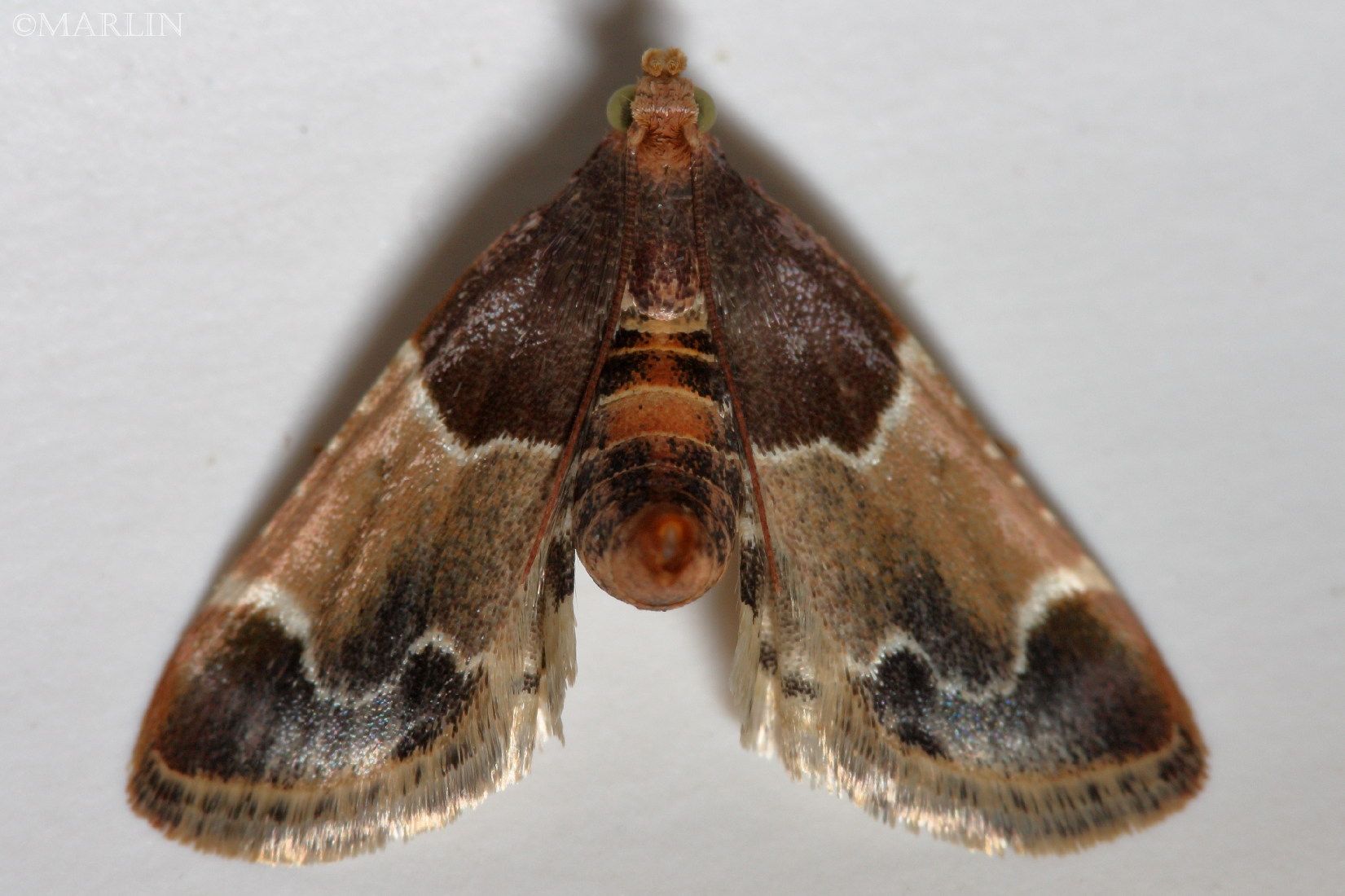
Meal Moth – Pyralis farinalis
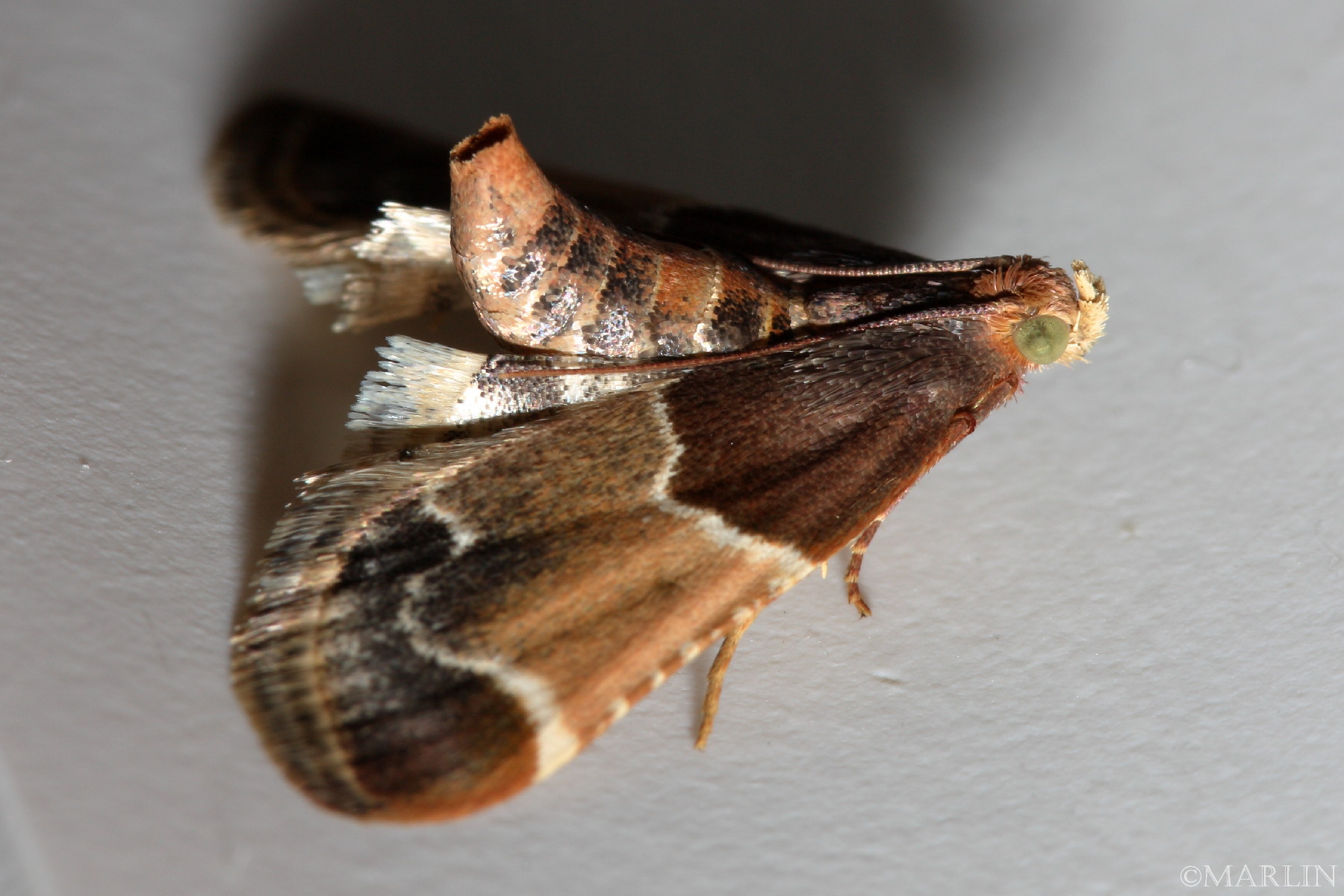
Hodges#5510
Family: Pyralidae – Pyralid Moths. Live adult moth photographed indoors at northern Illinois. Size= 20mm.
The genus Farinalis gets its name from the Latin farina, a fine meal of vegetable matter (as cereal grains, nuts or sea moss). [2] This cosmopolitan moth hangs out mainly in homes, barns, and warehouses where can be found grain or processed grain products. Larvae, which can grow to 20mm, feed on stored grain, flour, corn meal and other milled grain products.
Meal moths attack stored grain products or household foodstuffs. Once established in food, insect populations can increase and infest vulnerable material throughout the home, apartment, or storage area. Some adult moths do fly into the home through open doors or windows, but most are carried inside from outdoor storage or in packaged goods or groceries.
Everyone’s home is vulnerable. However, those who do not store food properly have the greatest problems. Spilled or exposed foods attract the insects and increase the chance of infestation. Foods that are not tightly sealed, especially those maintained for long periods of time, are particularly susceptible to infestation.
The Indianmeal moth and the Mediterranean flour moth are the most prevalent meal moths which infest foodstuffs in the U.S. Several other moths that are sometimes found in foodstuffs include the meal moth, the white shouldered house moth, and the brown house moth. [3]
The adult female meal moth lays about 200 – 400 eggs. The larval stage takes as little as 6 weeks. Larvae spin tough silk tubes that are coated or mixed with food particles; they stay in these tubes and feed from the open ends. When fully developed, the larvae leave these tubes and spin silken cocoons in which they pupate.
The larvae of this moth species feed on a variety of grain products. They are generally a problem on food products that are in poor condition, moist, or stored in damp places. [3]
References
- Bugguide.net, Pyralis farinalis – Meal Moth – Hodges#5510
- G.C. Merriam Co, Webster’s Third New Int’l Dictionary 1981
- Arthur L. Antonelli, Washington State University Cooperative Extension and USDA, Meal Moths
Moths Index | Moths | Butterflies Main | Butterflies Index
Tree Encyclopedia / North American Insects & Spiders
Online since 2002