
Diamondback Moth – Plutella xylostella
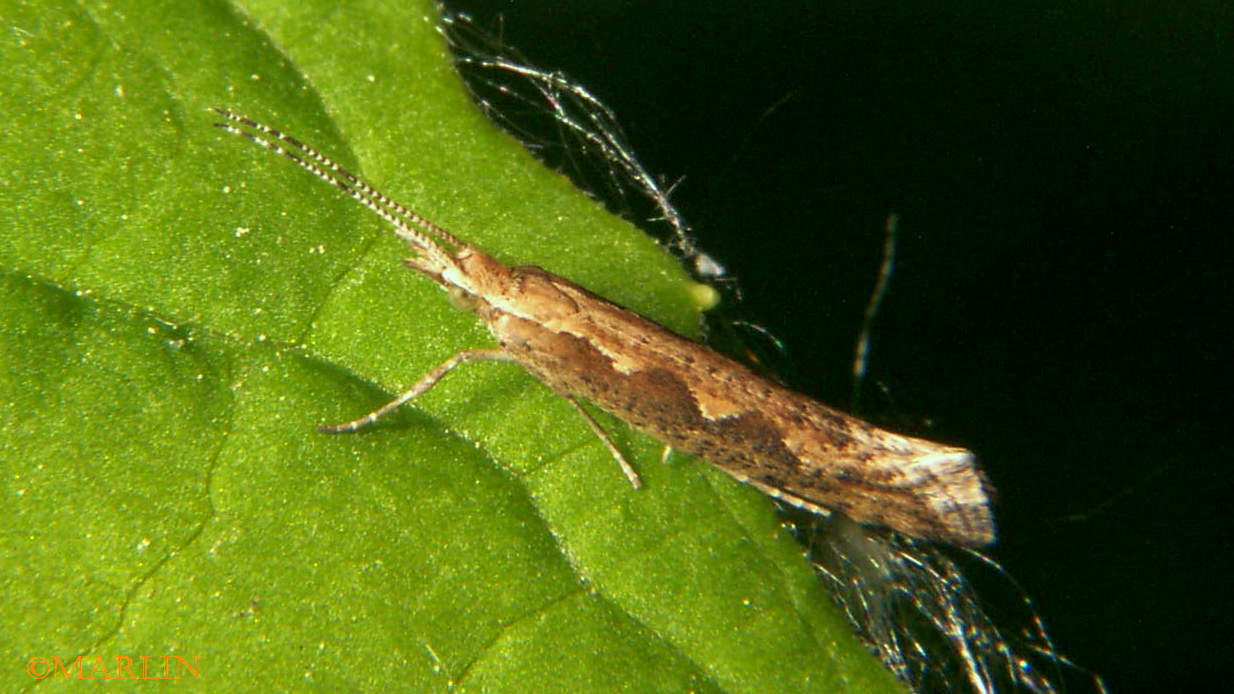
Hodges # 2366 / Order: Lepidoptera / Family: Plutellidae. Live adult moths photographed at West Chicago Prairie, DuPage County, Illinois. Size: 5mm
Diamondback moths larvae attack only plants in the family Cruciferae. Virtually all cruciferous vegetable crops are eaten, including broccoli, Brussels sprouts, cabbage, Chinese cabbage, cauliflower, collard, kale, kohlrabi, mustard, radish, turnip, and watercress.
Biological control: There are several biological enemies that help control diamondback moths. For example, in Honduras, the parasitoid wasp Diadegma insularis (Hymenoptera: Chalcididae) can kill up to 40% of the caterpillars when there is a limited use of synthetic pesticides. In Asia, the parasitoid Diadegma semiclauson has been used on a commercial basis for control of DBM caterpillars.
Chemical control: DBM has developed resistance to the bacterial pesticide, Bacillus thuringiensis, in areas where it is in heavy use, leaving farmers without a useful pesticide. Because of severe pesticide resistance problems with DBM around the globe, it is very important to use pesticides as little as possible in an IPM program. You need to contact the local authorities for the specific pesticides to use in your country. It is recommended to make a pesticide screening study to find the best pesticides to use in rotation between the different pesticide families.
Order Lepidoptera: Moths. Unlike the butterflies, moths are usually nocturnal. Many moths and their caterpillars are major agricultural pests in large parts of the world. Moths in the family Tineidae are commonly regarded as pests because their larvae eat fabrics, clothes and blankets made from natural fibers such as wool or silk. Butterflies Main | Moths | Moths Index | Butterflies Index