
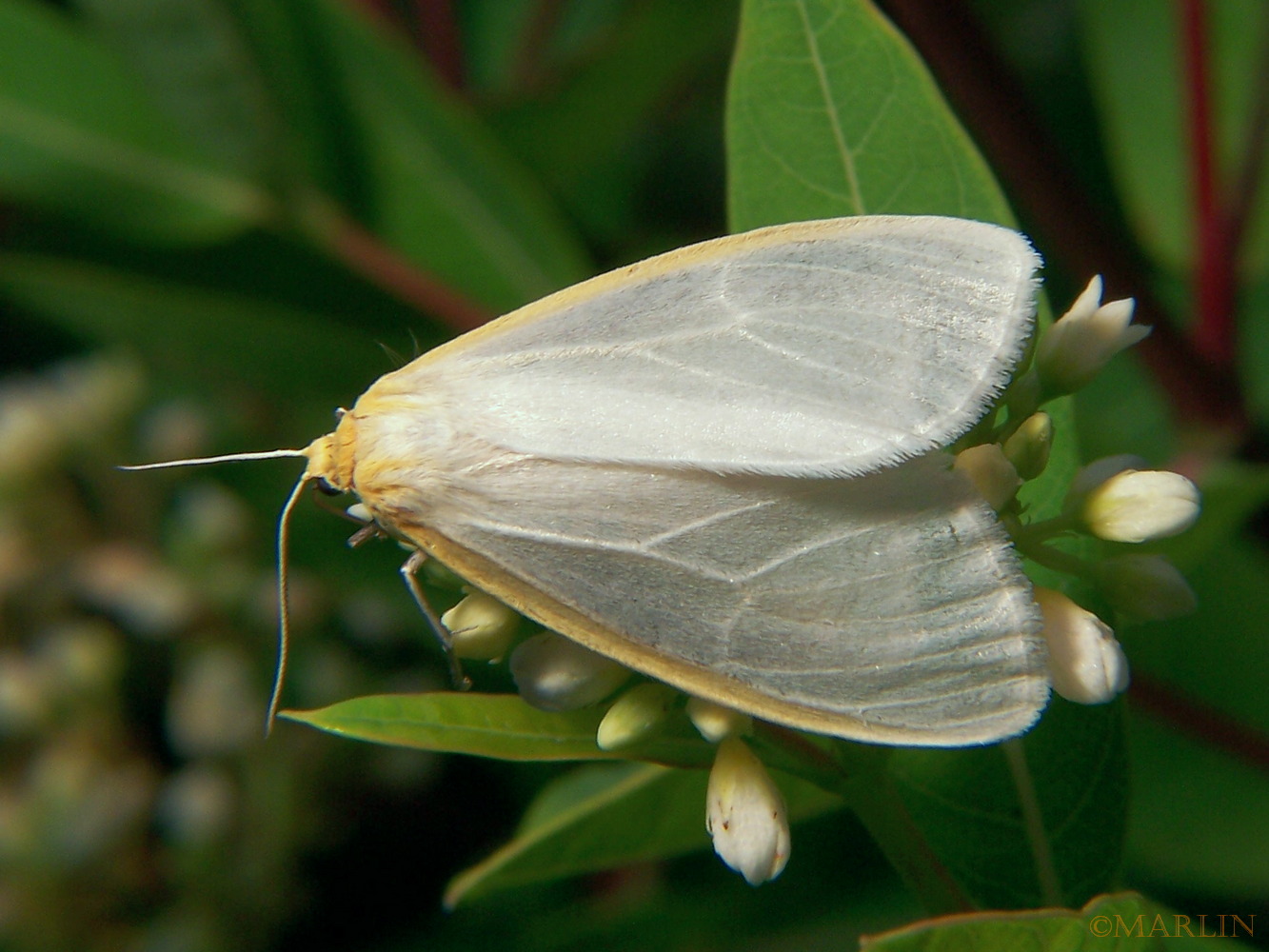
Delicate Cycnia Moth – Cycnia tenera
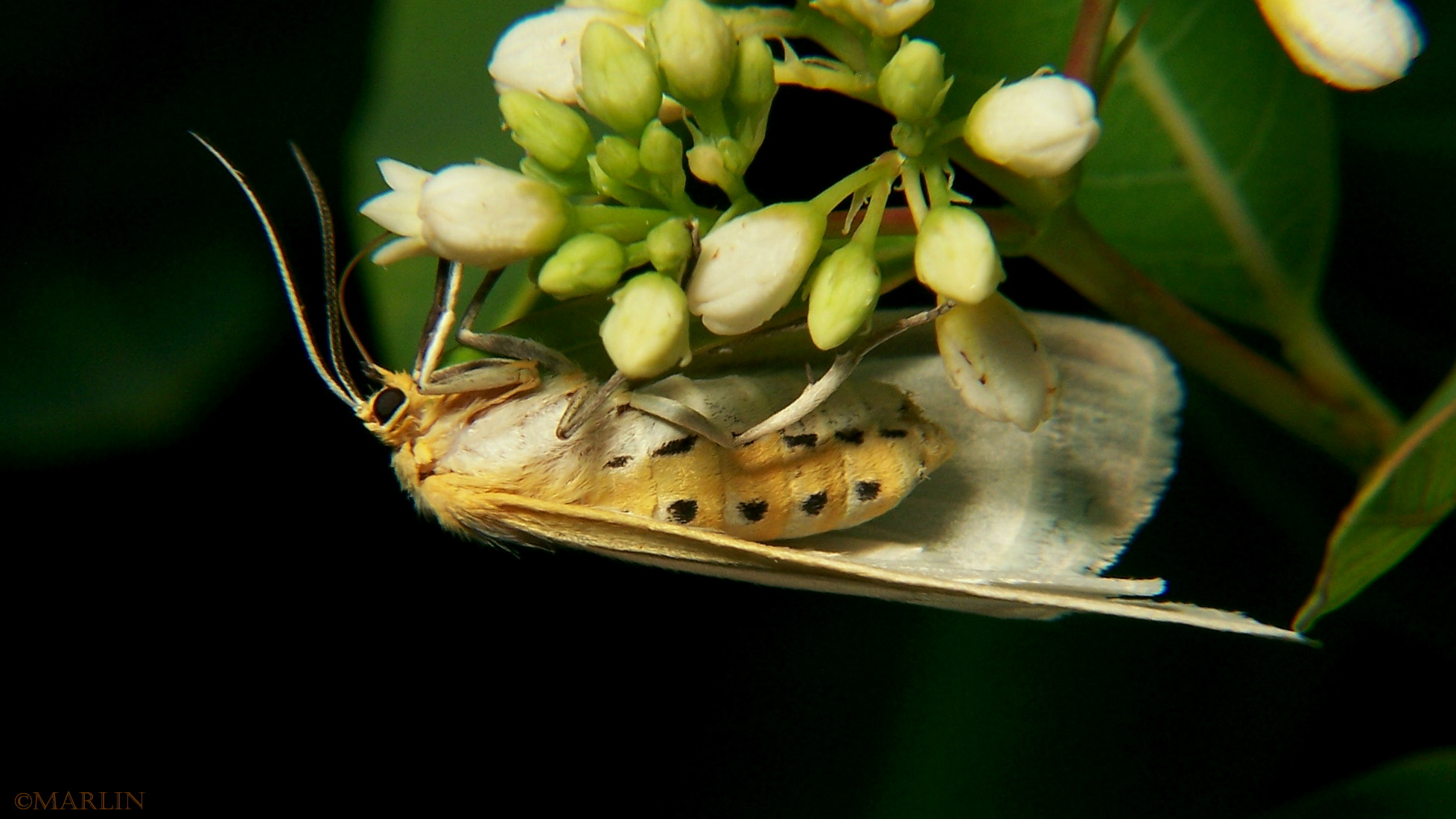
BBC Wildlife Magazine published these photos in September 2007
Subfamily Arctiinae – Tiger and Lichen Moths Hodges#8230
This moth was actively nectaring during the daytime (diurnal). Size: 20mm not including antennae.
Formerly family Arctiidae, this is a large and diverse family of moths with around 11,000 species in three tribes worldwide [2].
The most distinctive feature of the family is a tymbal organ on the metathorax which uses a thin membrane to produce ultrasonic countermeasures against their chief predator’s (bats) echolocation system. Larvae of some species use sound along with color to advertise their inedibility; many species acquire chemical defenses from their hostplants e.g., milkweeds or dogbane.)
Many of the caterpillars and adults are active during the daytime. Common folklore has it that the forthcoming severity of a winter can be predicted by the amount of black on the Isabella tiger moth’s caterpillar, the most familiar woolly bear in North America; however the relative width of the black band varies among instars, not according to weather. Isabella tiger moths (Pyrrharctia isabella) overwinter in the caterpillar stage. They can survive freezing at moderate subzero temperatures by producing a cryo-protectant chemical (Layne and Kuharsky 2000). The larvae of another species, Phragmatobia fuliginosa, may be found on snow seeking a place to pupate.
Order Lepidoptera: Moths. Unlike the butterflies, moths are usually nocturnal. Many moths and their caterpillars are major agricultural pests in large parts of the world. Moths in the family Tineidae are commonly regarded as pests because their larvae eat fabrics, clothes and blankets made from natural fibers such as wool or silk. Butterfly Main | Moths | Moths Index | Butterfly Index | Skippers