Virginia Creeper Clearwing Moth – Albuna fraxini
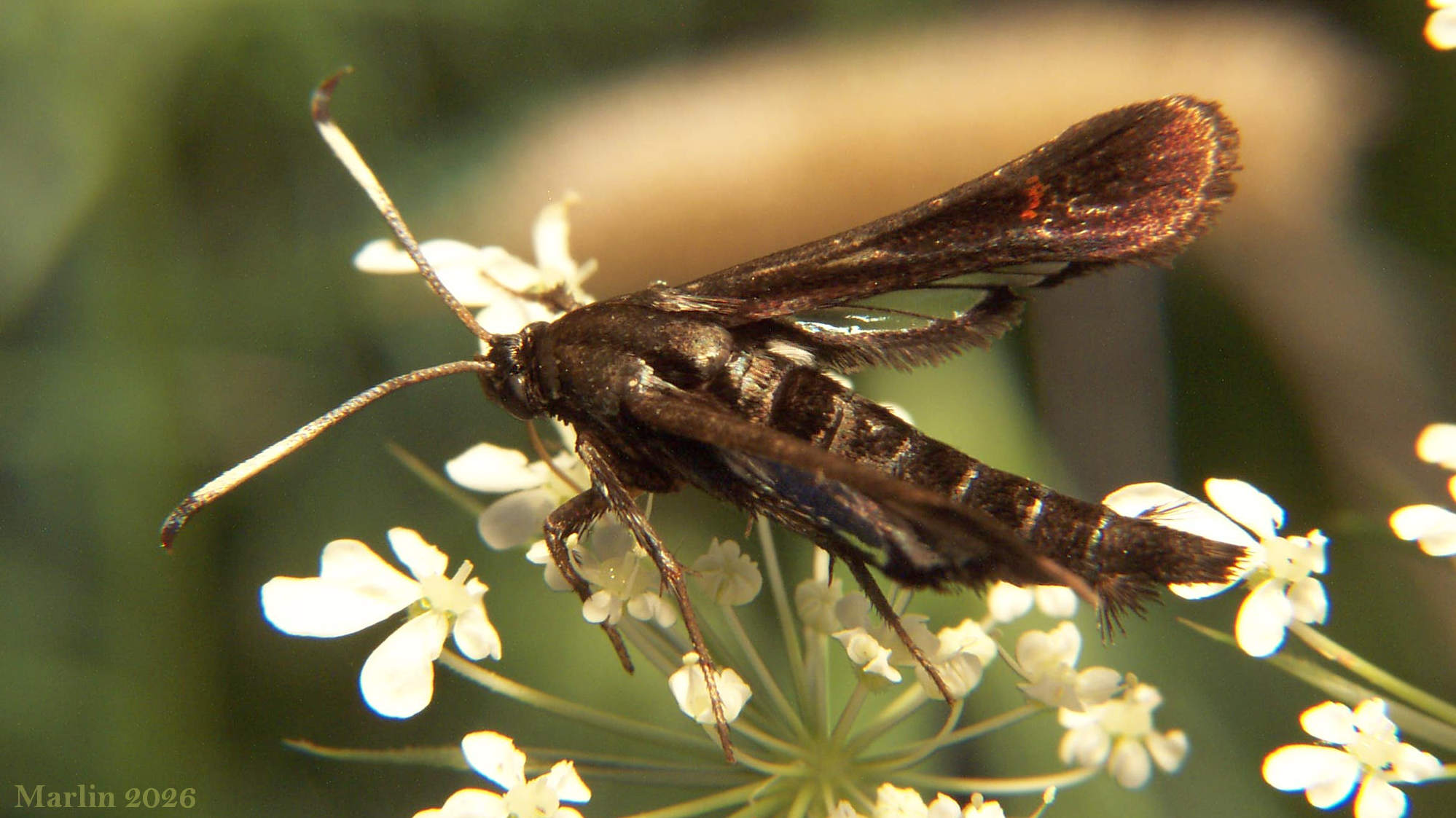
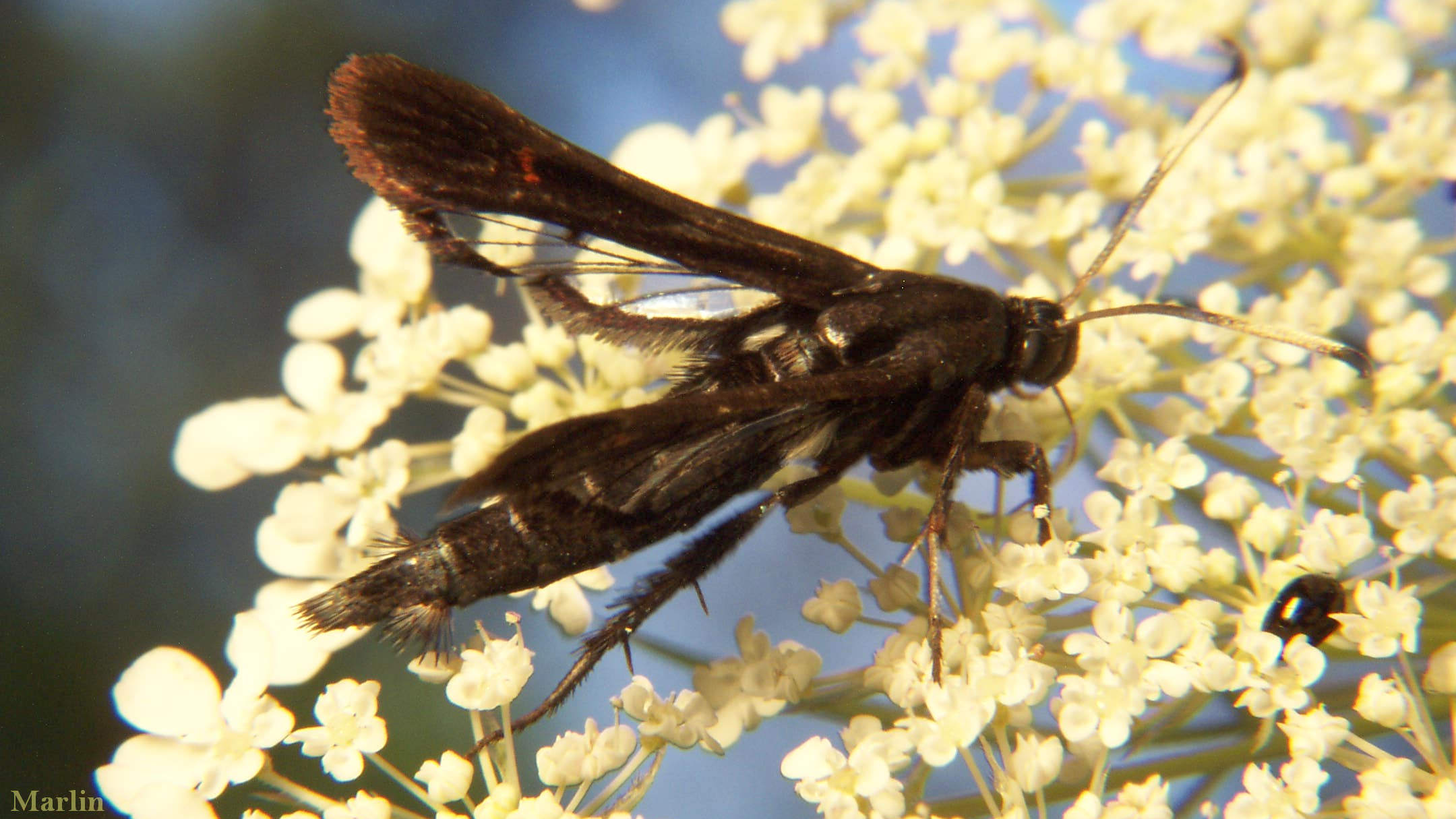 Clearwing moth adults have long, narrow front wings and shorter, wider hind wings. The hind wings, and in some species the front wings, are mostly clear. These moths fly during the day or at twilight, and their yellow and black coloring resembles that of paper wasps or yellowjackets. Adults display wasp-like behavior by intermittently running while rapidly fluttering their wings. They differ in color depending on species and sex.
Clearwing moths develop through four life stages: egg, larva, pupa, and adult. Adults do not directly damage plants and live only about 1 week.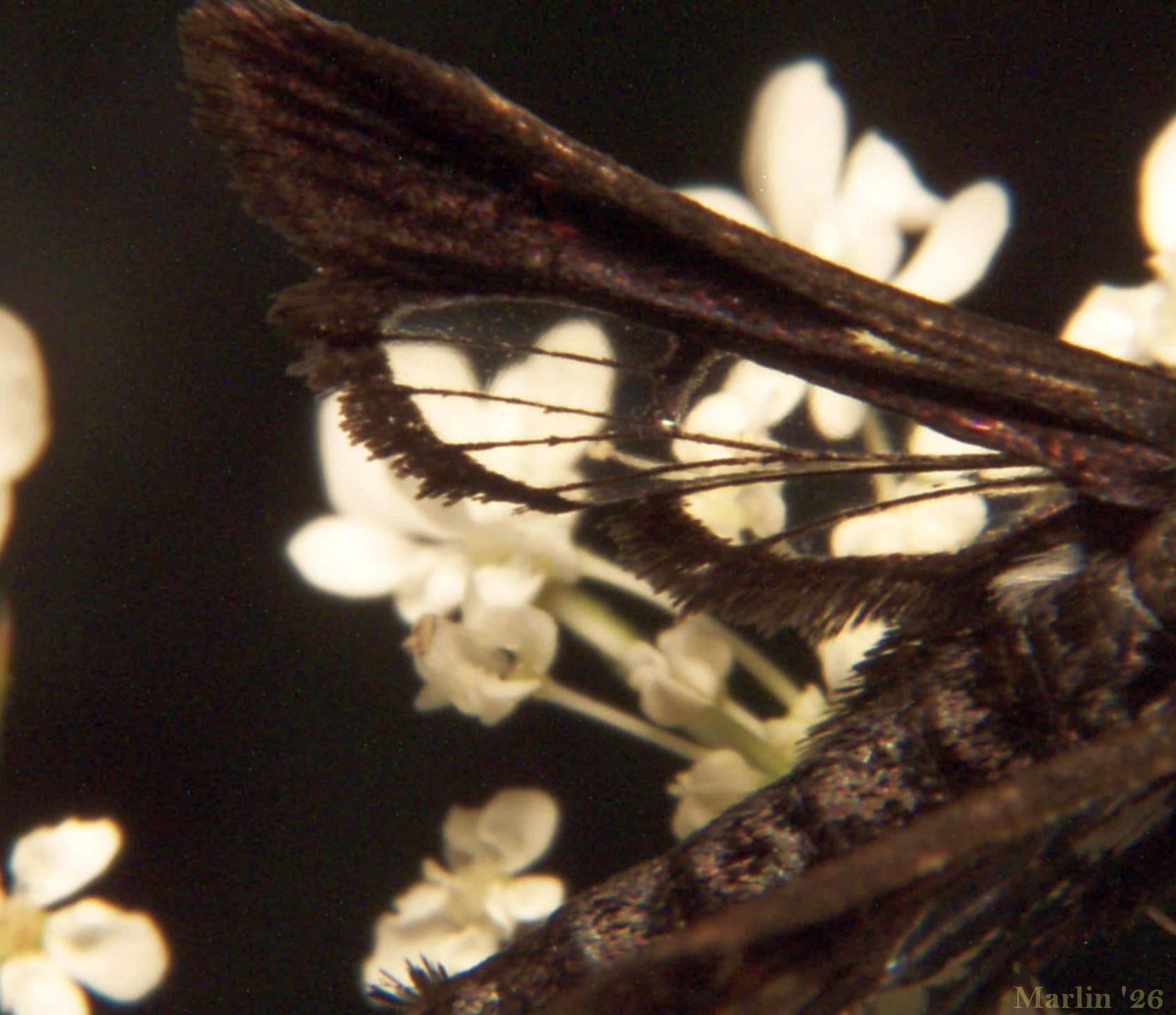 The larvae of clearwing moths are major wood-boring pests of woody plants. Hosts include alder, ash, birch, fir, oak, pine, willows and poplars, sycamore, and stone fruit trees (Rosaceae) such as apricot, cherry, peach, and plum. Larvae that closely resemble those of clearwing moths include the American plum borer (Euzophera semifuneralis, family Pyralidae), a serious boring pest of hosts that include fruit and nut trees, mountain ash, olive, and sycamore. Other common wood-borers include bark beetles (family Scolytidae), longhorned borers (Cerambycidae), and roundheaded borers (Buprestidae).
 The larvae of the Sesiidae are typically wood-borers, or burrow in plant roots. Many species are serious pests of fruit-tree or timber cultivation, or crop plants (e.g. Melittia spp. on squash) (Edwards et al., 1999). The Sesiidae share their common name with moths in the Hemaris genus of the family Sphingidae; the hummingbird clearwing and snowberry clearwings are members of Hemaris. They are generally much larger and furrier than the Sesiidae and are much more able mimics, of bumblebees and hummingbirds. [2]
Soon after emerging from the pupal case, female moths emit a pheromone that attracts males. After mating, the female deposits her tiny reddish to pale pink eggs in cracks, crevices, and rough or wounded areas on bark. Eggs hatch in about 1 to 4 weeks. The newly emerged larvae bore into the bark, cambium, or heartwood of the host tree. Mature larvae pupate beneath bark, except for the peach tree borer, which pupates in soil. [1]Traps containing clearwing moth sex attractant (pheromone) are used primarily for monitoring. However, continual dispersion of clearwing moth pheromone throughout the mating season to reduce the ability of the adult moth to mate (a process called “mating disruption”) has been found effective in reducing peachtree borer populations and injury in orchards in the eastern United States. Mating disruption is relatively expensive and labor intensive, and apparently has not been investigated in landscapes. [1]
References:
1. S. H. Dreistadt, UC IPM Program, UC Davis; and E. J. Perry, UC Coop Extension Pest Notes: Clearwing Moths University of California
2. Bugguide.net Virginia Creeper Clearwing Moth, Hodges #2532
Moths Index / North American Insects & Spiders Online since 2002