
Mud Dauber Wasp – Sceliphron caementarium
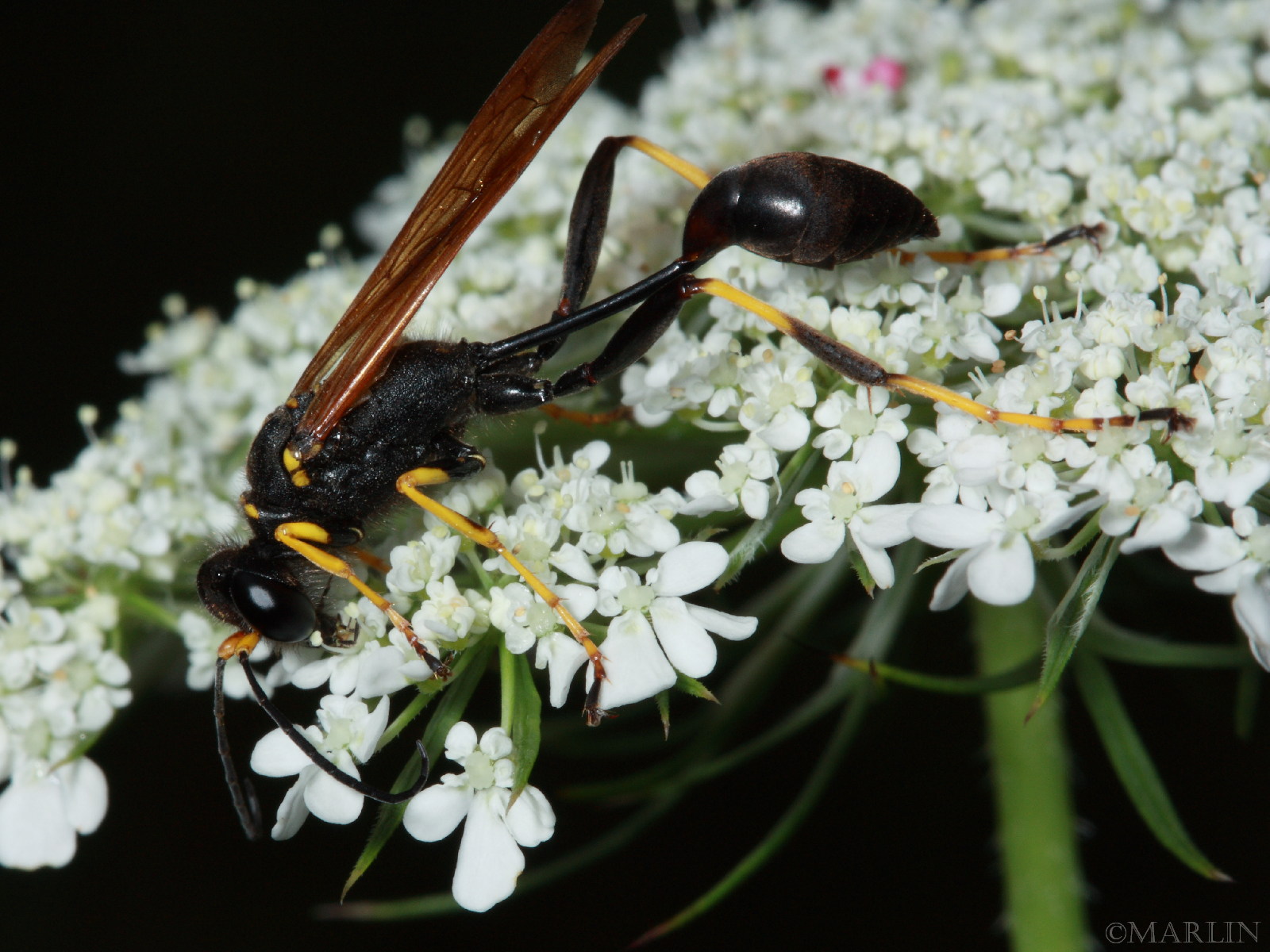
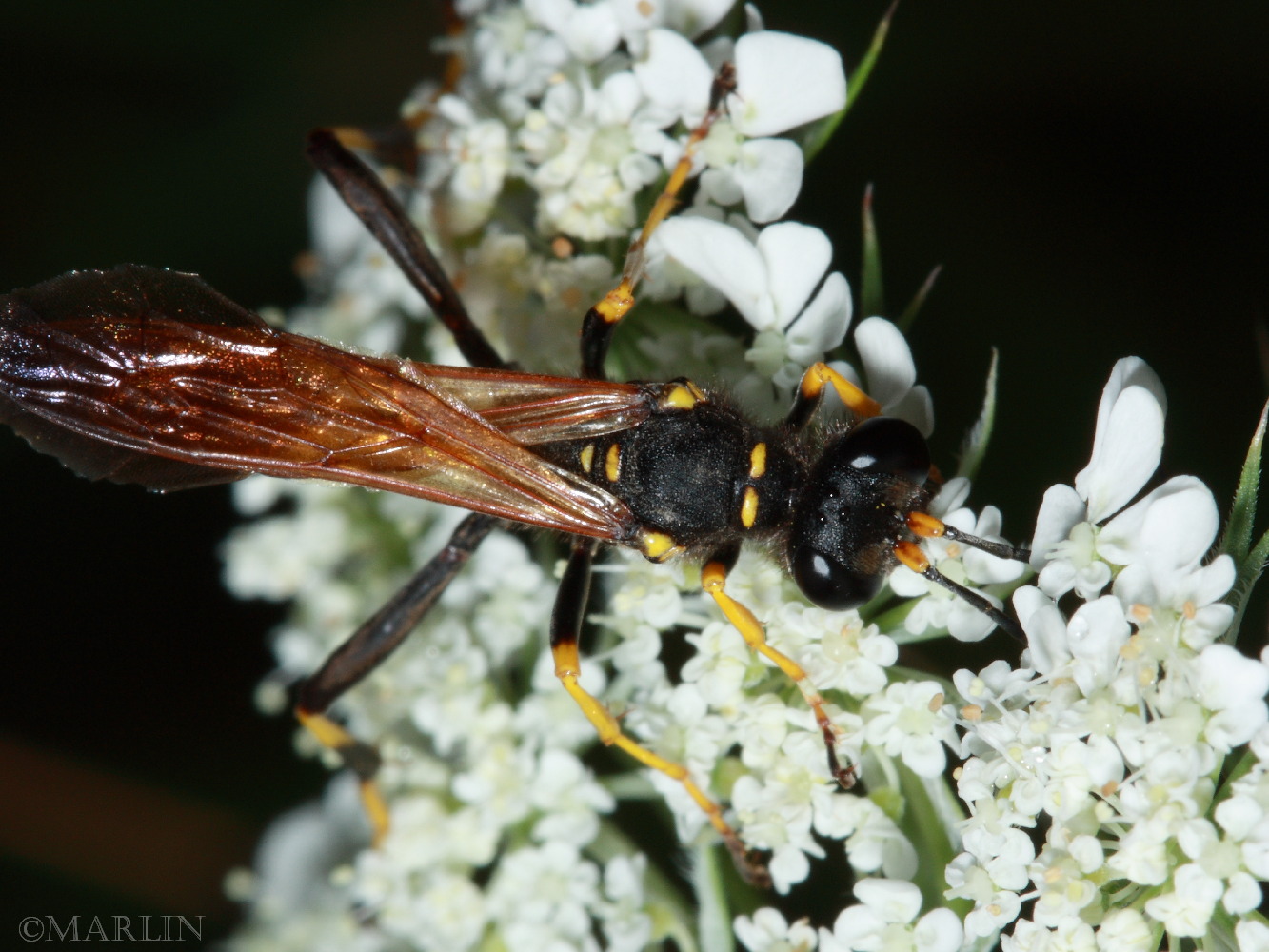
Live adult mud dauber wasps and nest photographed and filmed at Illinois and Pennsylvania.
Black-and-yellow mud daubers are solitary wasps about 1 inch long. A lone founding female builds a nest in a location protected from rain. She carries small globs of liquid mud into location and then uses a furious buzzing of her wings to shape the mud and drive out air bubbles, just like workers use vibrating equipment when laying thick layers of concrete. When the mud dries sufficiently, the wasp provisions each cell with live, paralyzed spiders and a single egg is laid in each cell. She then seals and abandons the nest. The eggs hatch, and the larvae feed on their fresh food stores, growing up to one inch long. Larvae then spin cocoons and pupate within the cell.
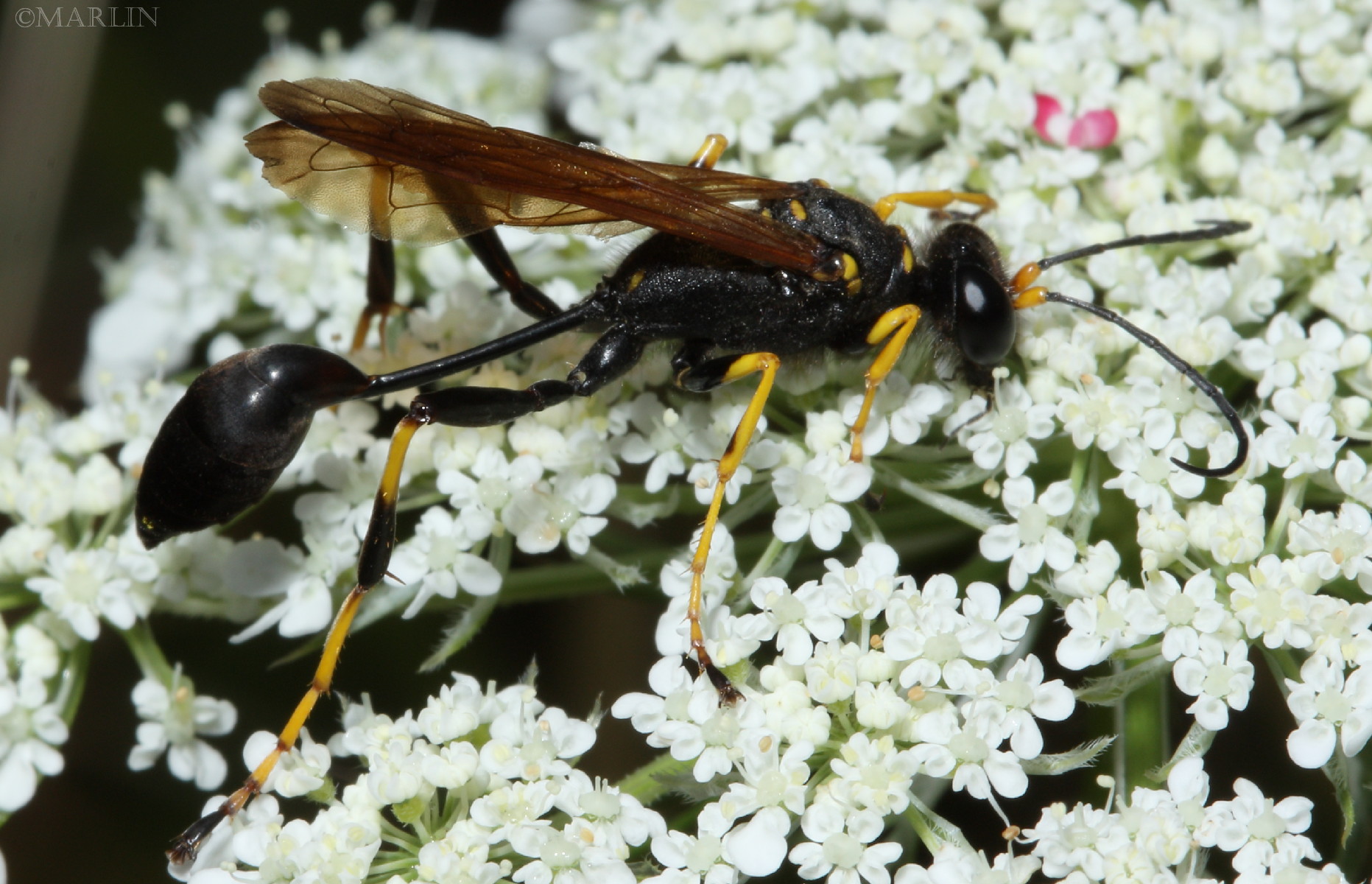
The female mud dauber is eating pollen to fuel her nest-building and hunting and egg-laying. They feed at hummingbird feeders too.
The variety of spiders captured by these wasps is amazing. One nest polled by Brad Barnd, Bugguide.net, contained more than 25 spiders from several different families, including orb weavers, crab spiders, running crab spiders, jumping spiders, and ghost spiders: Mud Dauber prey revealed. Although mud daubers are capable of stinging (that’s how they paralyze the spiders), they are not aggressive and do not defend their nests as do honeybees, paper wasps, or yellowjackets.
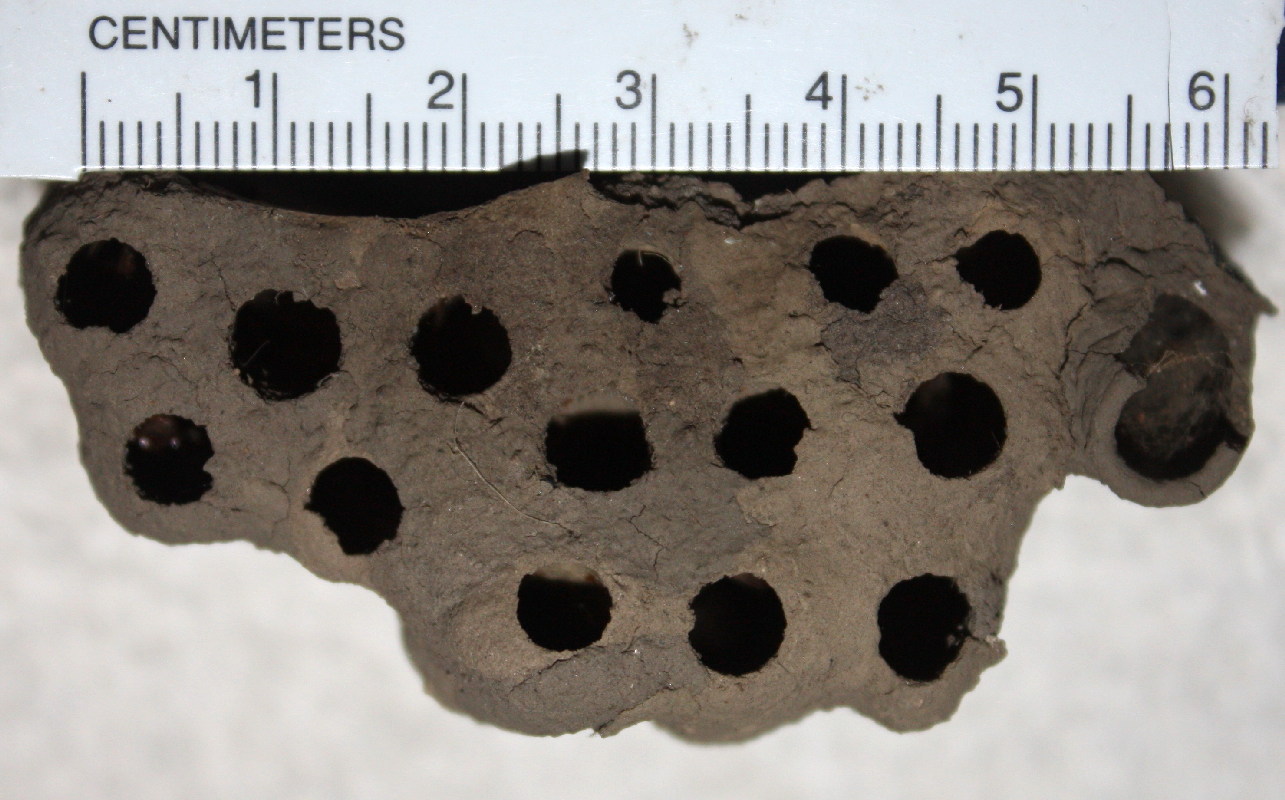
Looking from the back – this side is glued to a flat surface – the other side is sealed.
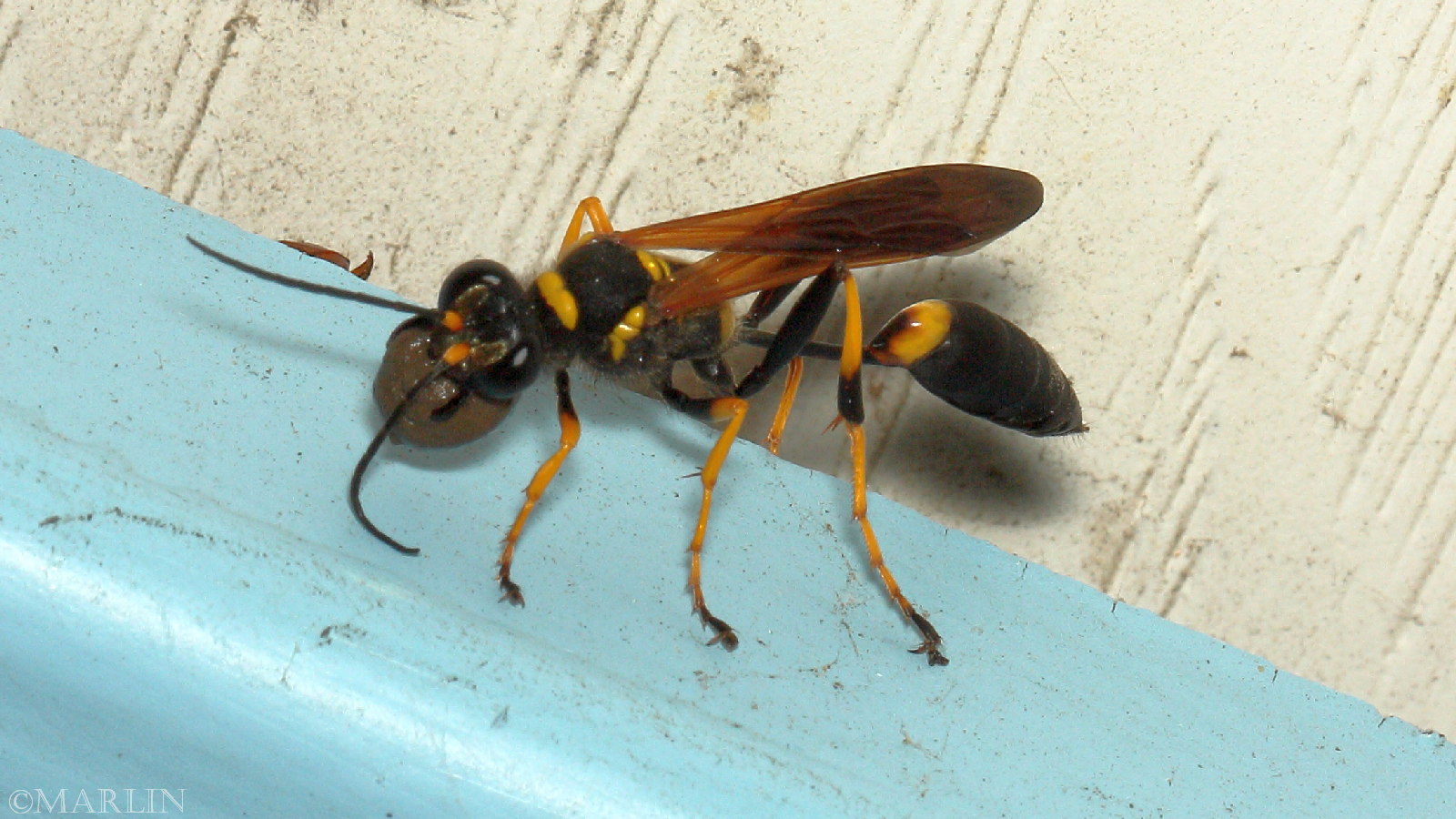
This active founding female is in-process building a mud nest – she takes 2-3 minutes to return with a glob of mud. I watched her gather mud blobs in my flower garden, where I keep mud wet for them in nesting season – she uses a fierce vibration of her wings to mold the blob into a ball she can carry easily, then uses the same buzzing to cement the blob to the (still wet) wall. This nest was built inside a treadmill I had stored in my garage. I see them hunting for spiders all over the place – but have never managed to capture a capture.
If you ever get a chance to watch one of these gals work, listen closely . . catch a buzz with Sceliphron!
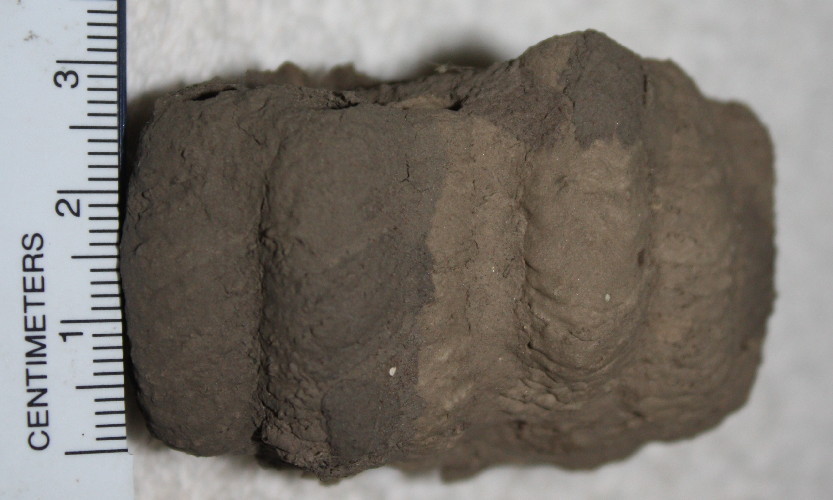
Mud nest is fully 1 inch deep
Insects & Spiders | Bees & Wasps Index | Bees & Wasps Main | Beetles Index
Tree Encyclopedia / North American Insects & Spiders is dedicated to providing family-friendly educational
resources for our friends around the world through large images and macro photographs of flora and fauna.
Online since 2002