Leafhopper – Graphocephala teliformis
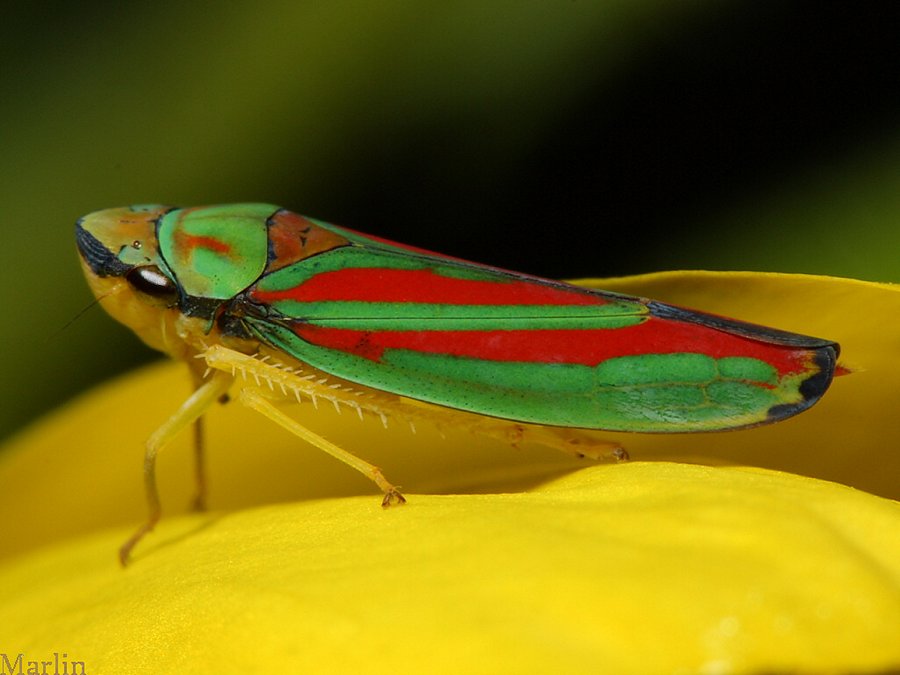
Family Cicadellidae – Leafhoppers / Subfamily: Cicadellinae [2]
Live adult leafhoppers photographed at Allegheny National Forest, Pennsylvania. Size: 9mm
“Sharpshooter” is one common name for the leafhopper subfamily Cicadellinae, which includes Paraulacizes, Oncometopia, Cuerna, Draeculacephala, Graphocephala and many other genera. They get this name from their habit of feeding on the watery sap of xylem tissue, which conducts moisture from the roots up to the leaves. Excess water droplets are forced out the tip of the abdomen with an audible popping noise, hence the common name. [1]
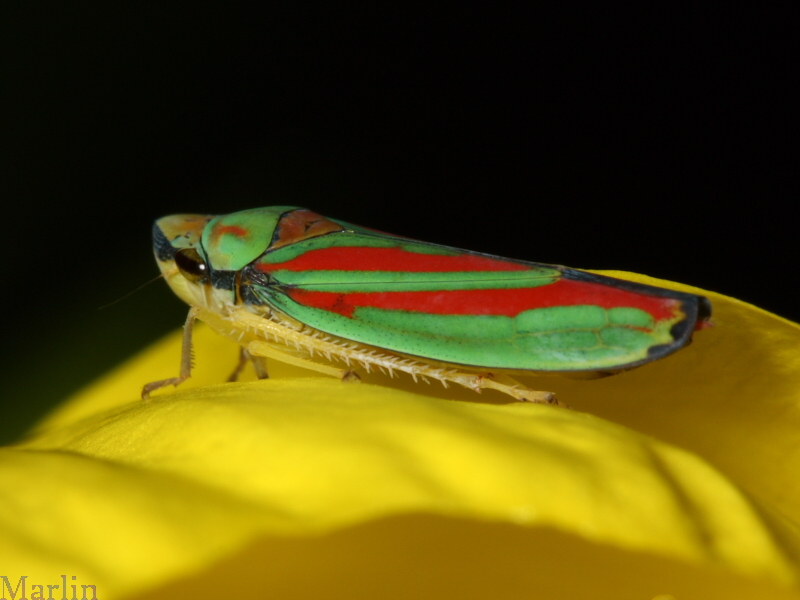
G. coccinea has been identified as one of several leafhopper vectors of a leaf scorch known as Pierce’s disease, caused by the gammaproteobacteria Xylella fastidiosa. It is responsible for the decline of certain woody plants such as elm, oak, and other ornamental trees. According to the United States National Arboretum, “An understanding of the transmission of this bacterium by insect vectors is economically important because there is neither any known effective therapy for infected trees and shrubs nor a strategy for preventing infection.”[4]
References
- Bugguide.net, Subfamily Cicadellinae
- Insects of Cedar Creek: Graphocephala coccinea
- USDA, ARS, Systematic Entomology Laboratory, Leafhoppers
- Dr. Jo-Ann Bentz, United States National Arboretum, Floral and Nursery Plants Research Unit, Management of Insect Pests of Ornamental Trees and Shrubs
Suborder Auchenorrhyncha – Cicadas & Planthoppers
Suborder Sternorrhyncha – Aphids, scales, mealybugs, jumping plant lice
Tree Encyclopedia / North American Insects & Spiders is dedicated to providing family-friendly educational
resources for our friends around the world through large images and macro photographs of flora and fauna.
Online since 2002