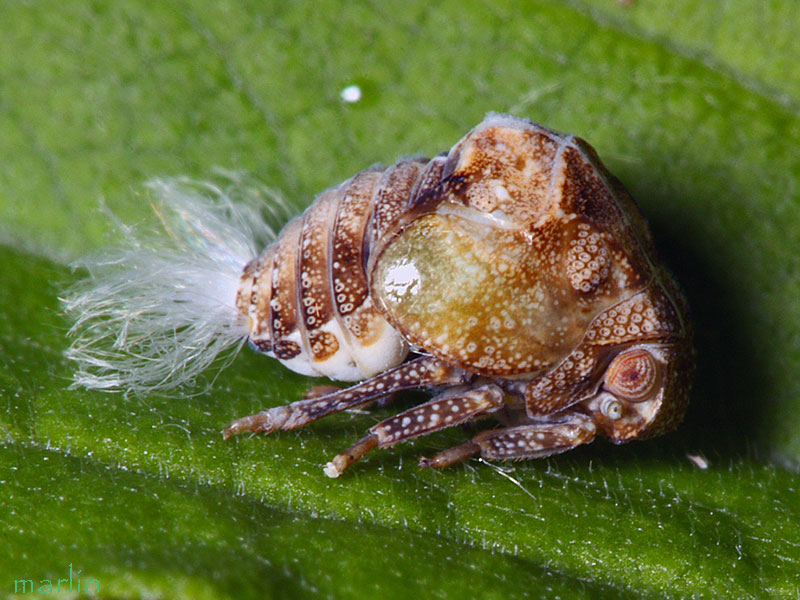
Derbid Planthopper Nymph – Anotia bonnetii
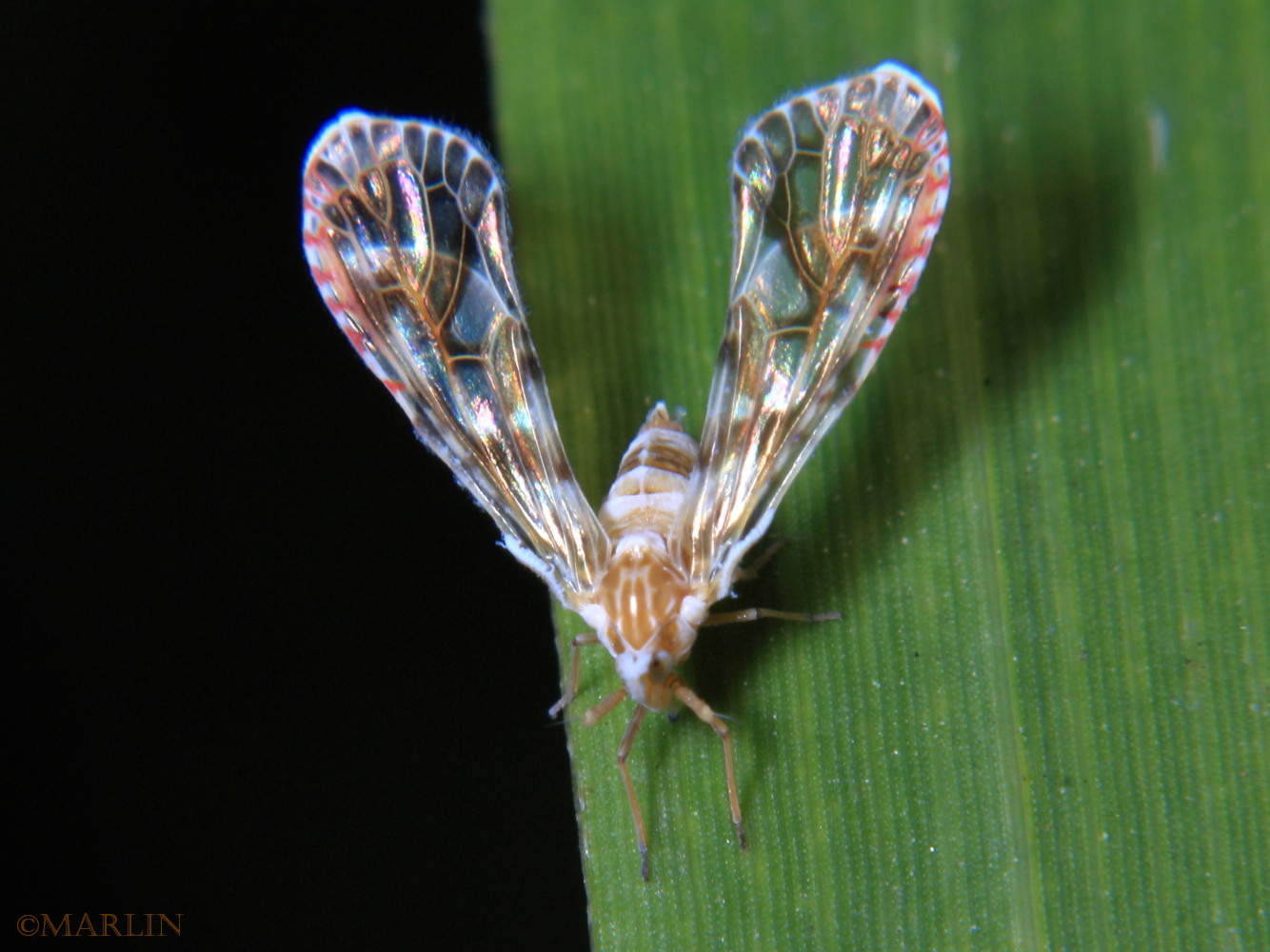
First of all, this thing is tiny – about 4mm. It gives one a feeling of accomplishment to even photograph something so small. Look at those colors!
Order Hemiptera / Suborder Auchenorrhyncha / Family Derbidae
Many planthopper nymphs make themselves unpalatable to predators by exuding a waxy, filamentous secretion that fouls their assailant’s antennae and mouthparts; you can see the residual “fluff” on this creature’s head and wing leading-edges.
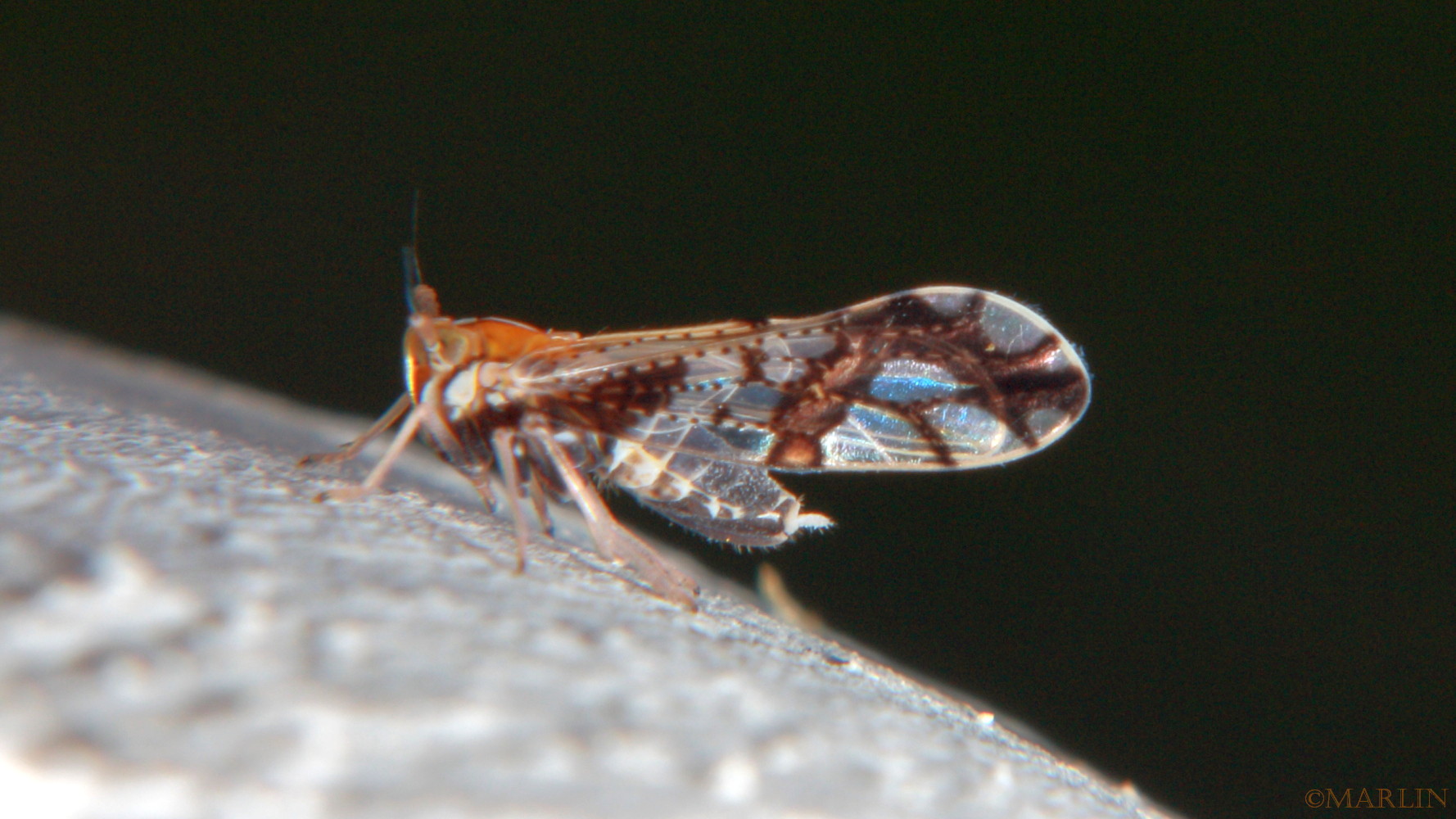
Family Derbidae includes 70 species in 17 genera in North America, and 1,700 species in about 160 genera worldwide [2]. This tiny nymph is only about 4mm long. They eat fungi and other organic detritus on the forest floor and decaying vegetation. I don’t think I have ever photographed an adult in this family. Adults subsist on plant sap.
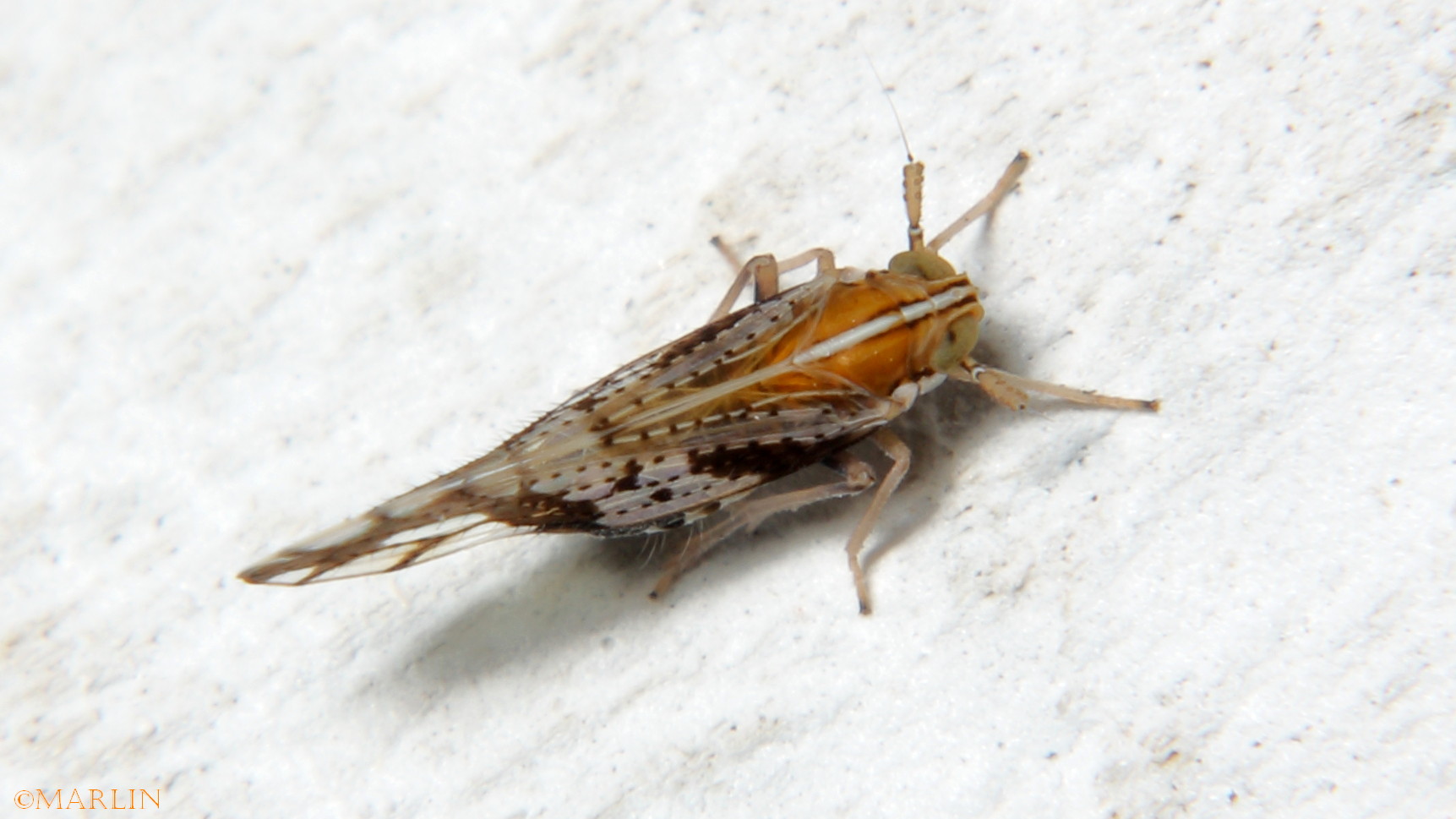
It’s easy to imagine a different world from this insect’s perspective.
 See also Planthopper Nymph, Acanalonia bivittata
Order Hemiptera: True Bugs number almost 5,000 species in North America, and 40,000 worldwide. They have mouthparts formed into a beak, adapted for sucking plant juices or the liquefied insides of their animal prey.
Suborder Auchenorrhyncha – Cicadas & Planthoppers
Suborder Sternorrhyncha – Aphids, scales, mealybugs, jumping plant lice