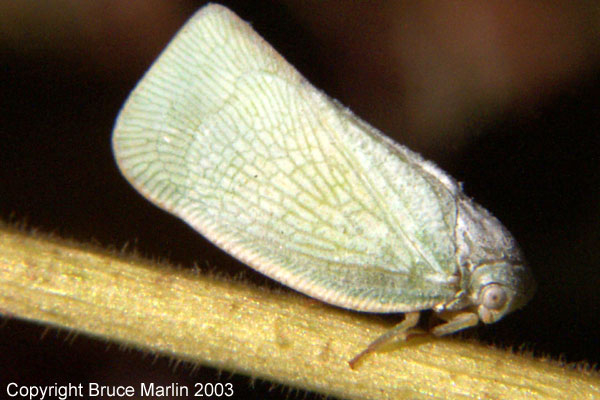
Suborder Auchenorryncha
Cicadas, Hoppers and Aphids
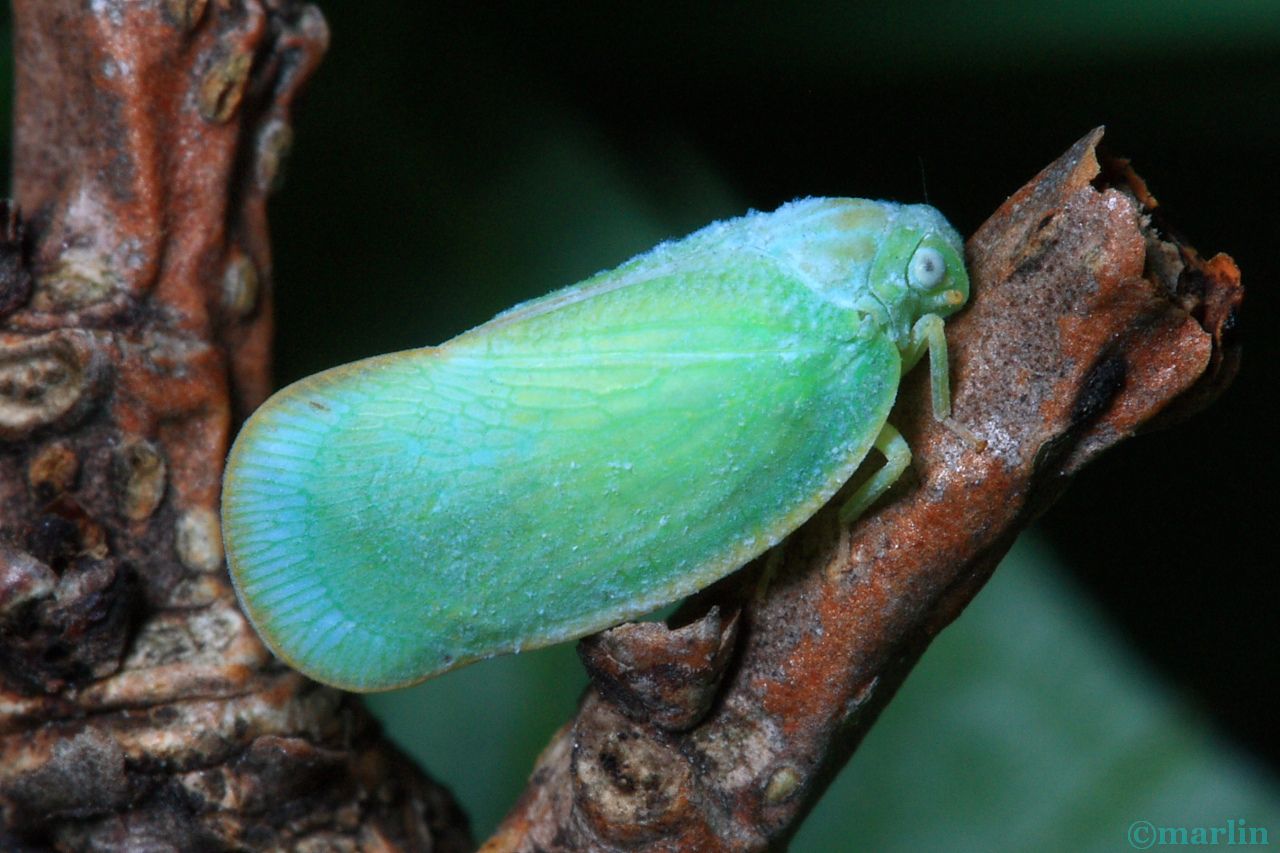
Flatid Planthopper – Ormenoides venusta
Hemiptera is presently divided into four suborders, after it was established that the families grouped together as “Homoptera” are not as closely related as had previously been thought. Auchenorrhyncha contains the cicadas, leafhoppers, treehoppers, planthoppers, and froghoppers.
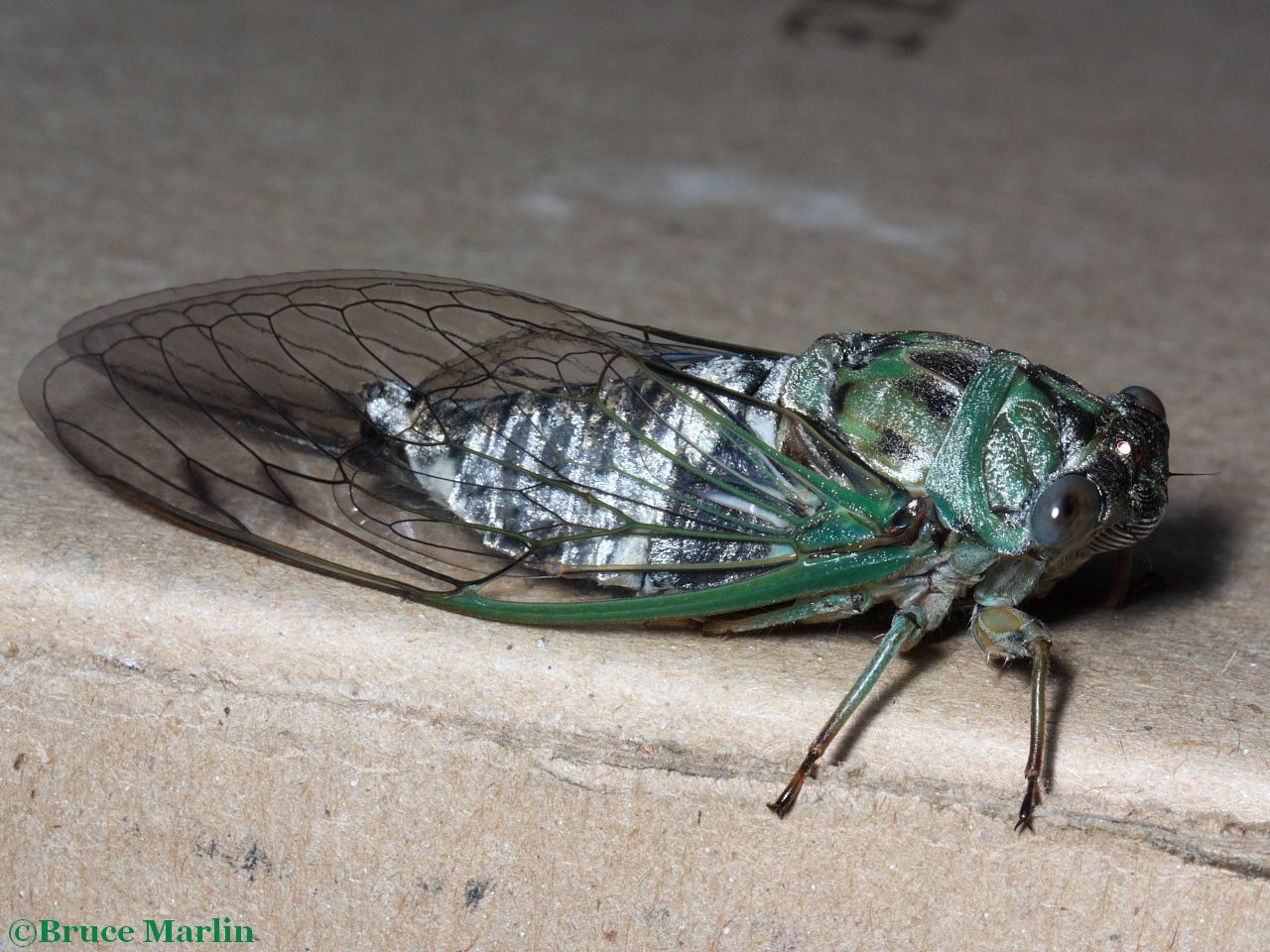
Newly-emerged periodic cicada
The suborder Sternorrhyncha contains aphids, whiteflies, scale, and mealybugs. Heteroptera, the least primitive of the hemipteroid assemblage, represents the true bugs.Cicadas are flying insects in the the Order Hemiptera. Their closest relatives are leafhoppers, treehoppers, and fulgoroids. Adult cicadas are large insects, and the males are said to be the loudest insect on Earth, at 110 decibels.
All but a few cicada species have multiple-year life cycles, most commonly 2-8 years. In most cicada species, adults can be found every year because the population is not developmentally synchronized; these are often called “annual” cicada species.
In contrast, populations of the periodic cicada species are synchronized, so that almost all of them mature into adults in the same year. The fact that periodic cicadas remain locked together in time is made even more amazing by their extremely long life-cycles of 13 or 17 years.
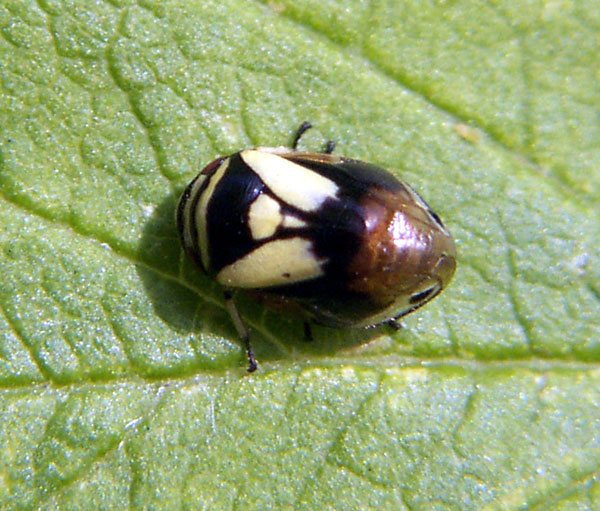
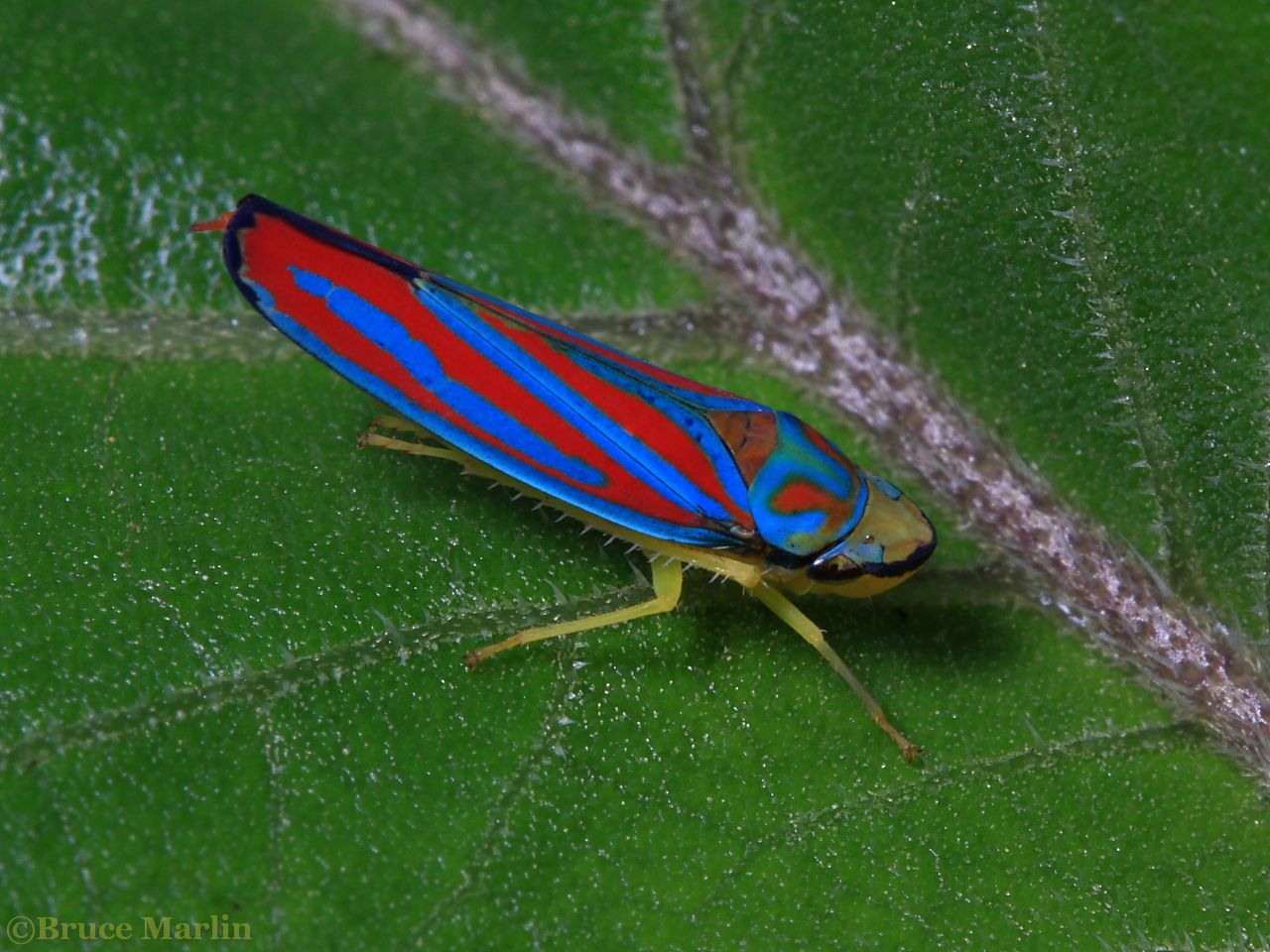 Red-banded Leafhopper – Graphocephala coccinea
Family Cicadellidae – Leafhoppers
“Sharpshooter” is one common name for the leafhopper subfamily Cicadellinae, which includes Paraulacizes, Oncometopia, Cuerna, Draeculacephala, Graphocephala and many other genera.
They get this name from their habit of feeding on the watery sap of xylem tissue, which conducts moisture from the roots up to the leaves. Excess water droplets are forced out the tip of the abdomen with an audible popping noise, hence the common name.
The red-banded leafhopper G. coccinea has been identified as one of several leafhopper vectors of a leaf scorch known as Pierce’s disease, caused by the gammaproteobacteria Xylella fastidiosa. It is partly responsible for the decline of certain woody plants such as elm, oak, and other ornamental trees.
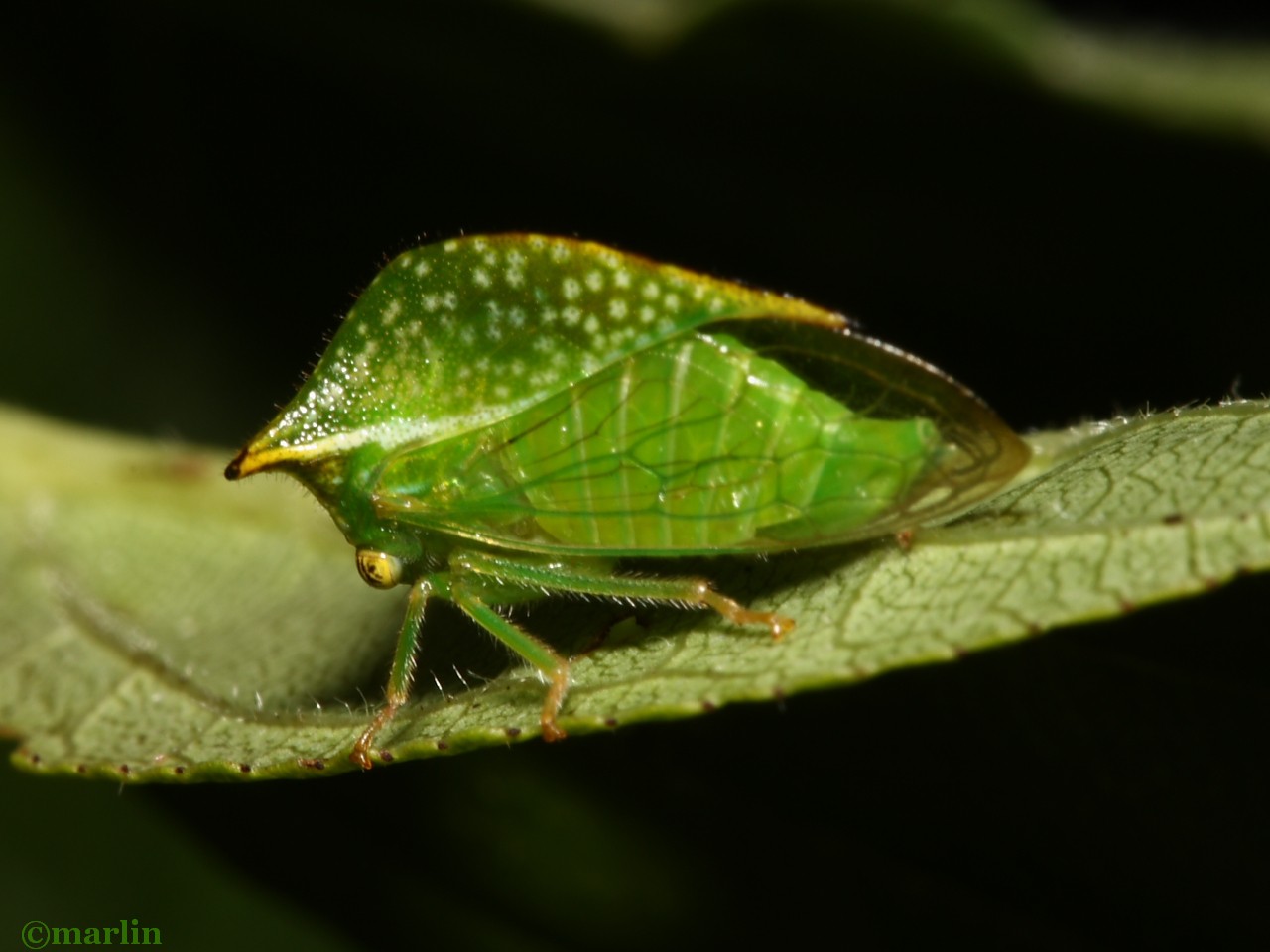
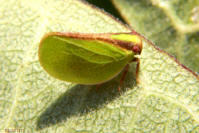
Individual treehoppers usually live for only a few months, but they belong to a lineage that is at least 40 million years old.
The oldest undoubted treehopper fossils are specimens of a few as yet undescribed species from amber found in the Dominican Republic.
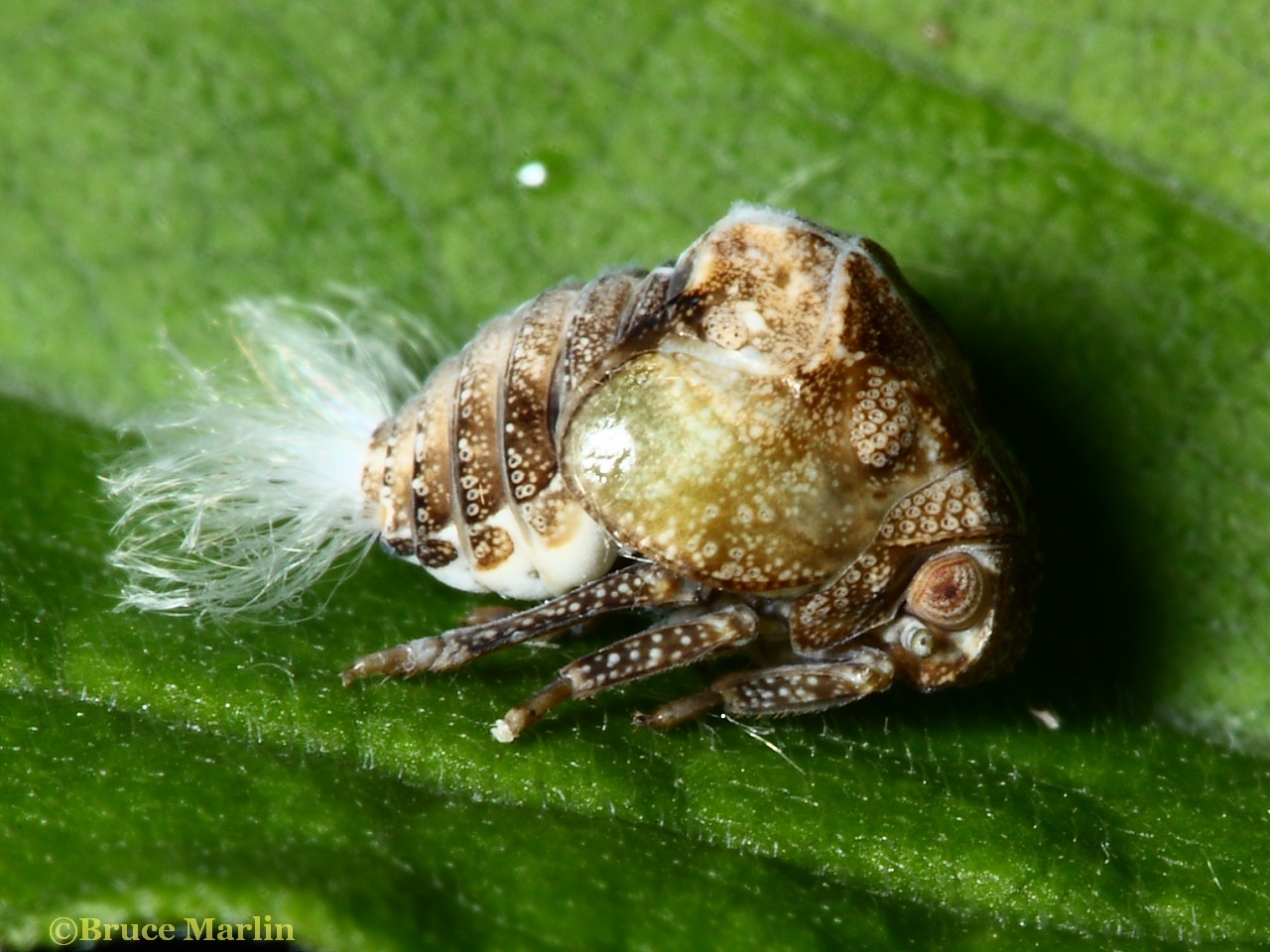
Planthopper Nymph A. Bivitatta
Many acanolid nymphs secrete a filamentous wax extruded from glandular tissue at the tip of the abdomen and various other areas. The wax provides protection from predators and prevents desiccation.
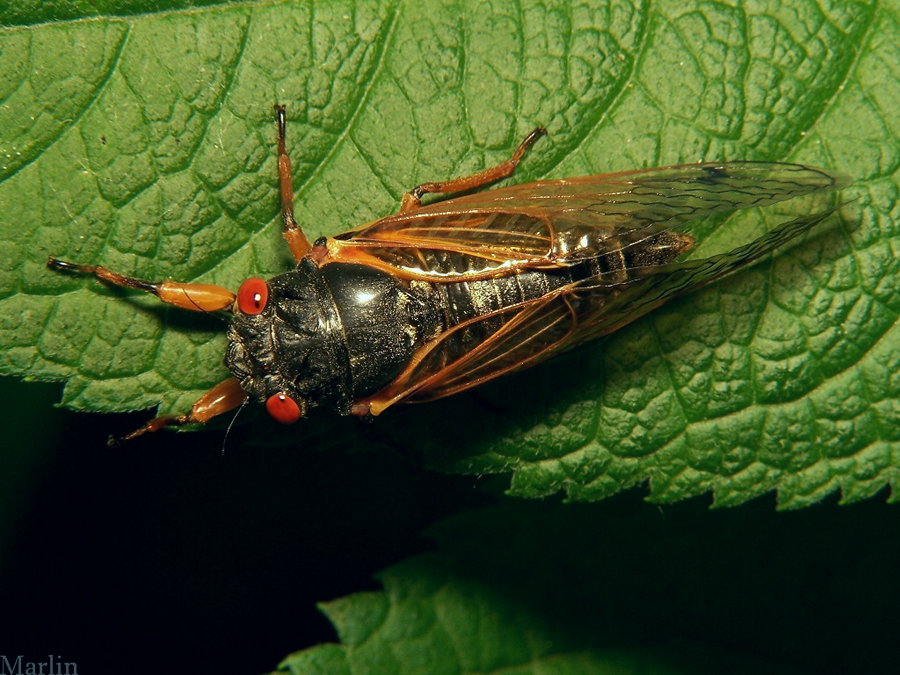 17-year periodic cicada, Magicicada sp. brood XIII, 2007
Predators become contaminated by the wax and immediately proceed to preen themselves in an effort to clean the wax off – not easily done. Meanwhile, adults and nymphs escape by leaping away.
The waxy coating also protects the insects from spider webs or puddles; they don’t stick to spider webs and they float quite well and can swim to safety.
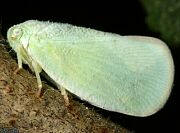
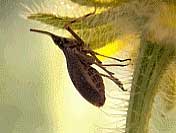
Planthopper
Ormenoides venusta
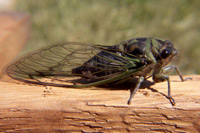
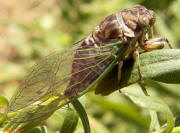
Annual Cicada
Tibicen canicularis
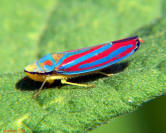
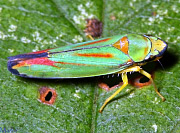
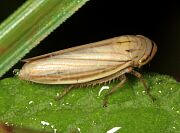
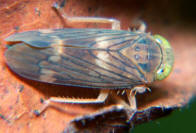
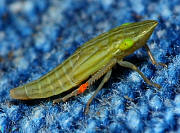
Leafhopper
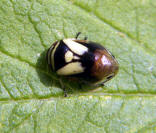
Order Hemiptera: True Bugs number almost 5,000 species in North America, and 40,000 worldwide. They have mouthparts formed into a beak, adapted for sucking plant juices or the liquefied insides of their animal prey.
References
- C. H. Dietrich, Illinois Natural History Survey, Treehoppers (Hemiptera: Cicadomorpha: Membracoidea)
- Bugguide.net, Ceresa taurina
- Mikó I, Friedrich F, Yoder MJ, Hines HM, Deitz LL, et al. (2012) On Dorsal Prothoracic Appendages in Treehoppers
- Benjamin Prud’homme, “Body plan innovation in treehoppers through the evolution of an extra wing-like appendage“
Bugs Main | Bugs Index
Tree Encyclopedia
North American Insects & Spiders
Online since 2002