Mosquitoes: A Rogue's Gallery
Family Culicidae
Mosquitoes are vector agents that carry disease-causing viruses, bacteria, and parasites from person to person without catching the disease themselves.
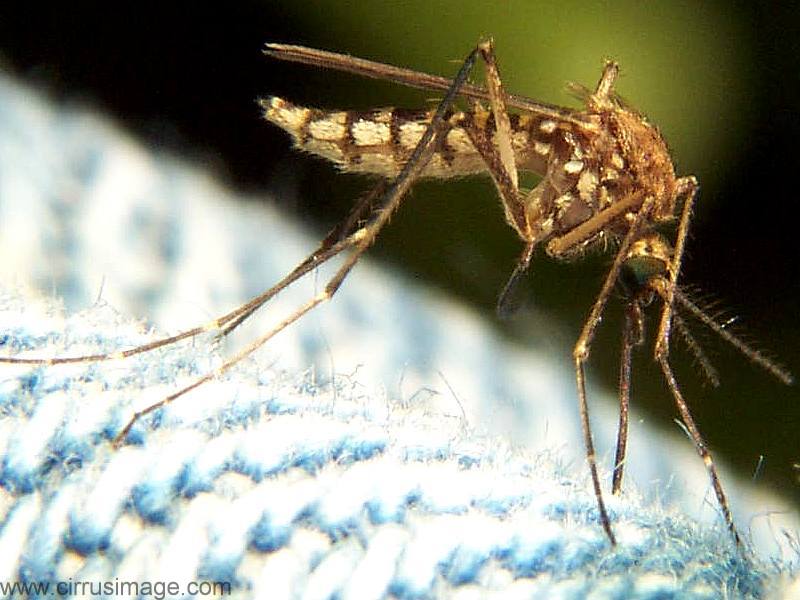
Here are different species of live adult mosquitoes photographed at various locations as noted.
 

Asian Tiger Mosquito, Aedes albopictus  Vero Beach, Florida
Photos by Sean McCann used with permission


Ochlerotatus infirmatus
 
Mosquitoes have four distinct life stages, with the first three stages of Culiseta (egg-larva-pupa) being spent in the water. An adult female lays about 150-200 eggs in clusters called rafts, which float on the surface of the water until they hatch in about two days. The eggs hatch into larvae (wigglers), which then feed on small organic particles and microorganisms in the water. About 10 days are required for larval development. At the end of the larval stage, the mosquito molts and becomes the aquatic pupa (tumbler). The pupa is active only if disturbed, for this is the "resting" stage where the larval form is transformed into the adult. This takes about two days during which time feeding does not occur. When the transformation is completed, the new adult splits the pupal skin and emerges.

Larvae are found in a wide variety of standing water sources including creeks, fish ponds, abandoned swimming pools, stagnant and polluted waters, log ponds, reservoirs, snow pools, brackish water, horse troughs, artificial containers, and even discarded automobile tires. Under optimum conditions development from egg to adult takes about two to three weeks. However, all mosquito developmental times are dependent on the temperature and food values of the water in which they develop.

Females feed primarily on fowl and domestic animals but on occasion will bite humans. Due to the limited flight range of this mosquito, most breeding sites are located near the area of complaints. Males do not bite, but feed on nectar and plant juices. Culiseta incidens is primarily a domestic nuisance and in some regions is considered relatively unimportant as a human pest. Successful laboratory experimental transmission of St. Louis Encephalitis (SLE), Western Equine Encephalitis (WEE) and Japanese B Encephalitis (JBE) virus does indicate a potential medical importance for this mosquito.

Where breeding sites exist in standing or slow moving water, corrective action to permanently eliminate them by such means as filling, pumping, ditching or draining is recommended. Ornamental ponds and watering troughs are common sources. Often the cool weather mosquito may be controlled in a source by stocking mosquito fish (Gambusia affinis).

Due to the often delicate environmental interrelationships of some ponds, chemical control should only be practiced by trained mosquito abatement or health department personnel. These officials have knowledge of the proper compounds and application techniques to assure minimal environmental side effects. Public health agencies generally are able to provide information and assistance where organized mosquito control programs are unavailable. It is important to remember that chemical control provides only temporary relief and is used by public agencies until other measures can be implemented. Commonly available insect repellents may be useful if it is necessary to be in an area where large numbers of this species exist. --excerpts from Marin / Sonoma Mosquito & Vector Control District


Aedes taeniorhynchus

A mosquito's proboscis consists of six parts: two pairs of sharp, flexible serrated blades and sharp-tipped knives, used to cut the hole in skin into which the whole apparatus is inserted, and two very fine tubes; one for injecting an anticoagulant into the wound, and the other for sucking blood into the mosquito's body. You can see an excellent electron micrograph of the proboscis tip HERE.


Mosquitoes are a vector agent that carries disease-causing viruses and parasites from person to person without catching the disease themselves. Female mosquitoes suck blood from people and other animals as part of their eating and reproductive habits. The female mosquito that bites an infected person and then bites an uninfected person might leave traces of virus or parasite from the infected person's blood. The infected blood is injected through, or on, the "dirty" proboscis into the uninfected person's blood and the disease is thus spread from person to person. When a mosquito bites, she also injects saliva and anti-coagulants into the blood which may also contain disease-causing viruses or other parasites. This cycle can be interrupted by killing the mosquitoes (actually, it's more efficient to kill their larvae before they become airborne), isolating infected people from all mosquitoes while they are infectious or vaccinating the exposed population. All three techniques have been used, often in combination, to control mosquito transmitted diseases. Window screens, introduced in the 1880s, were called "the most humane contribution the 19th century made to the preservation of sanity and good temper."

Mosquitoes are estimated to transmit disease to more than 70 million people annually in Africa, South America, Central America, Mexico and much of Asia with millions of resulting deaths. In Europe, Russia, Greenland, Canada, the United States, Australia, New Zealand, Japan and other temperate and developed countries, mosquito bites are now mostly an irritating nuisance; but still cause some deaths each year. Historically, before mosquito transmitted diseases were brought under control, they caused tens of thousands of deaths in these countries and hundreds of thousands of infections.[16] Mosquitoes were shown to be the method by which yellow fever and malaria were transmitted from person to person by Walter Reed, William C. Gorgas and associates in the U.S. Army Medical Corps first in Cuba and then around the Panama Canal in the early 1900s. Since then other diseases have been shown to be transmitted the same way.


Cool Weather Mosquito, Culisseta incidens

Mosquitos have killed more humans than all other insects combined

In much of the world, mosquitoes are a major public health problem; they are estimated to transmit disease to more than 69 million people annually. In the United States, Australia, New Zealand, the UK, Scandinavia, and other temperate countries, mosquito bites are mostly just a nuisance. However, global warming is increasing the range of mosquitos worldwide, resulting in increased frequency of dengue fever, Ross River fever, malaria and other mosquito borne diseases.

The mosquito genus Anopheles carries the malaria parasite, Plasmodium. Worldwide, malaria is a leading cause of premature mortality, particularly in children under the age of five, with around 5.3 million deaths annually, according to Center for Disease Control. Most species of mosquito can carry the filariasis worm, a parasite that causes a disfiguring condition (often referred to as elephantiasis) characterized by a great swelling of several parts of the body; worldwide, around 40 million people are living with a filariasis disability. Most species of mosquito can carry the viral diseases yellow fever, dengue fever, epidemic polyarthritis, Rift Valley fever, Ross River Fever, and West Nile virus. Mosquitoes do not transmit HIV. Viruses carried by arthropods such as mosquitoes or ticks are known collectively as arboviruses. West Nile virus was accidentally introduced into the United States in 1999 and by 2003 had spread to almost every state.
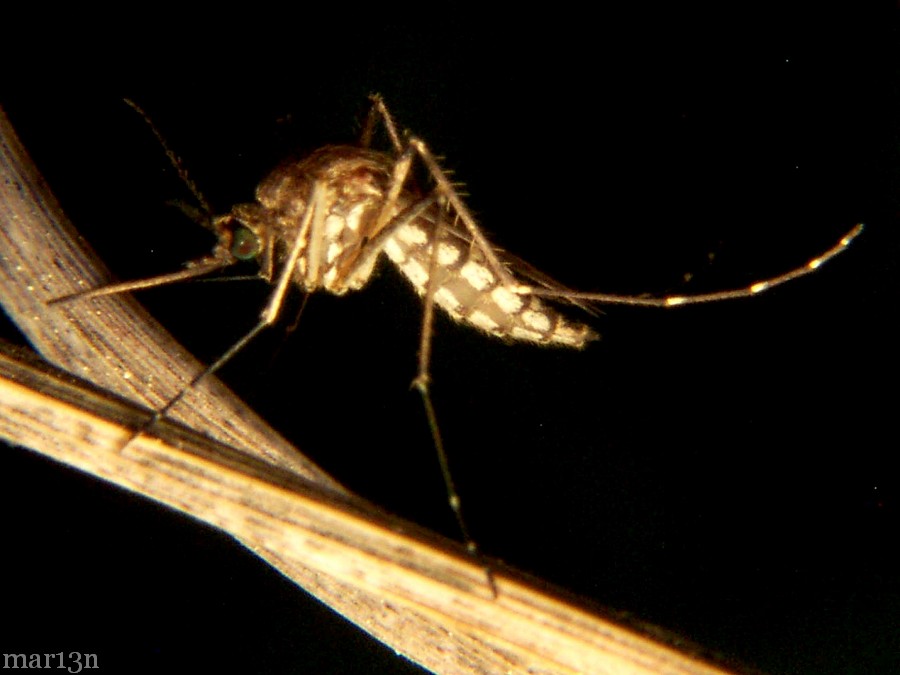


Aedes cinerus - Burnaby, British Columbia, Canada
Yup, the little bastard bit him:


      Web   www.cirrusimage.com

[Cirrus Home]    [Butterflies]    [Bugs]    [Beetles]    [Mantids]    [Spiders]    [Bees & Wasps]    [Dragon & Damselflies]    [Moths]   [Wildflowers]
[Fungi & Mushrooms]    [Flies]   [Butterflies of the World]  [Trees]  [Cicadas & Grasshoppers]   [Ticks & Mites]    [Invasive Species]

Photos © 2008 Sean McCann All Rights Reserved used with permission
Contact: GAGA