
Tailed Copper Butterfly – Lycaena arota
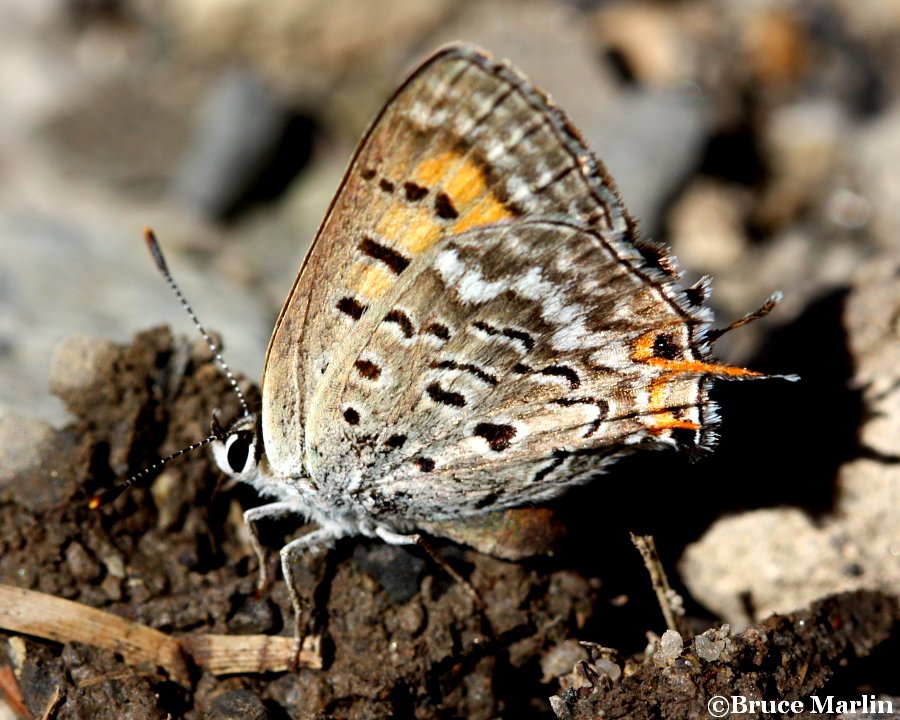
Female
Live adult butterflies photographed near Buena Vista, Colorado, USA. Family: Lycaenidae (Gossamer-wings)
Identification: Each hindwing of both sexes has a tail. Upper surface of male copper-brown with iridescent purple sheen; female with orange and dark brown pattern. Underside of both sexes gray; forewing with black spots, hindwing with black scrawls and a band of submarginal white crescents.
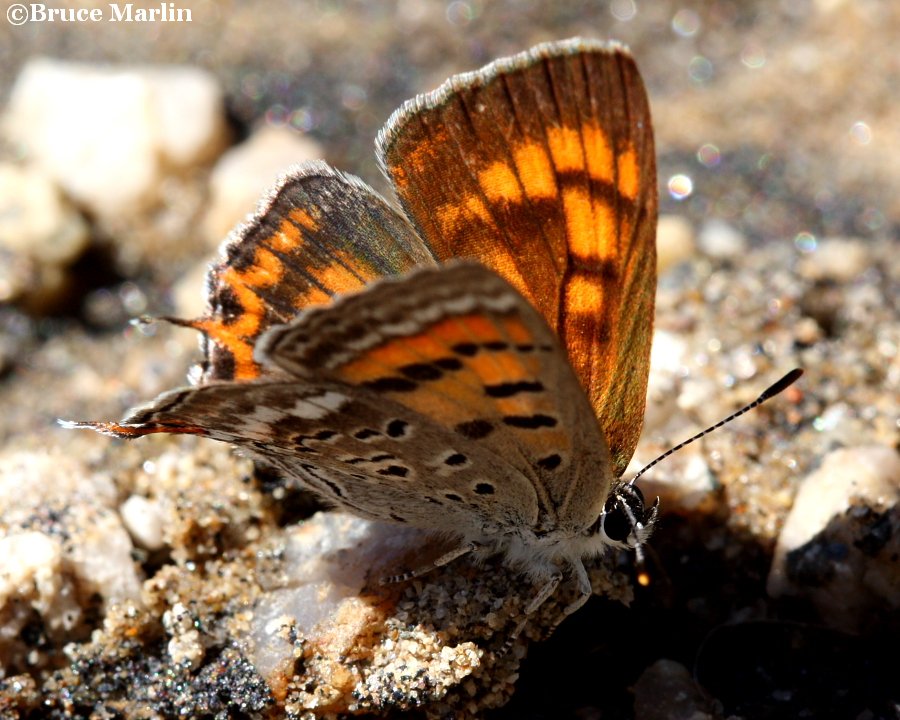 These lovely coppers were taking on water from the Arkansas River near Buena Vista, Colorado
Life cycle: Males perch in open areas, often near watercourses or ravines, in the morning to watch for females. Eggs are laid singly on host plant or on debris under it, and hibernate until the following spring.
Flight: One flight from May-August. Wing span: 1 1/8 – 1 3/8 inches (3 – 3.5 cm).
Caterpillar hosts: Leaves of gooseberry and currant in the Grossulariaceae family.
Adult food: Flower nectar. Habitat: Open mixed woodland, sagebrush, chaparral.
Range: New Mexico north and west to Oregon, south to southern California and Baja California.
Reference: Bugguide.net Tailed Copper
Butterfly Main | Skippers | Butterfly Index
North American Insects & Spiders
Online since 2002