
Great Spangled Fritillary – Speyeria cybele
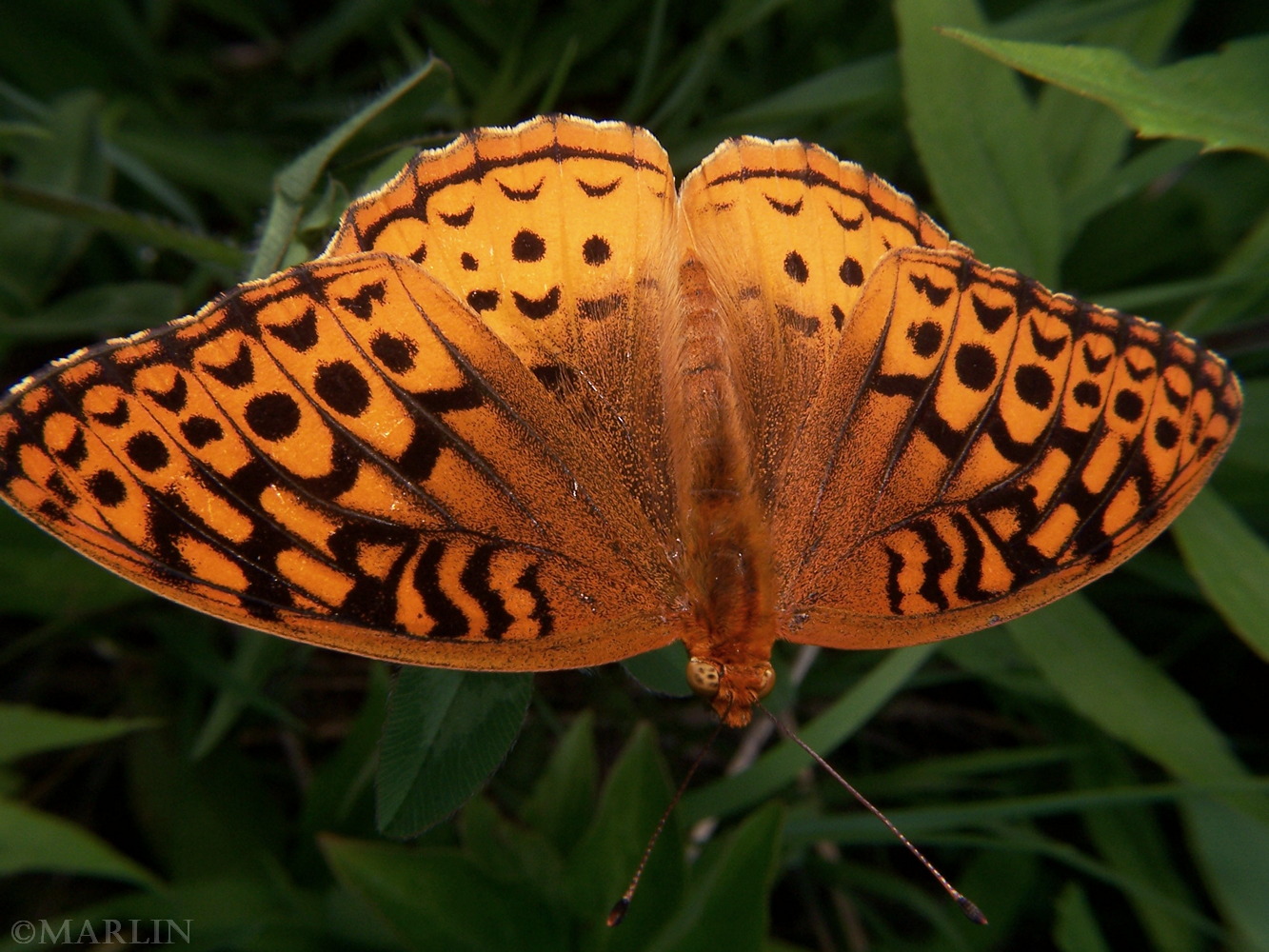
Live adult butterflies photographed at Des Plaines and Winfield, Illinois.
Family Nymphalidae.
Similar species include the Aphrodite fritillary (Speyeria aphrodite), the Atlantis fritillary (Speyeria atlantis) and the northwestern fritillary (Speyeria hesperis). It is distinguished from the Aphrodite and Atlantis fritillaries by a wide light submarginal band on the hindwing and instead of black spots, black dashes form on the margins of the forewing. [1]
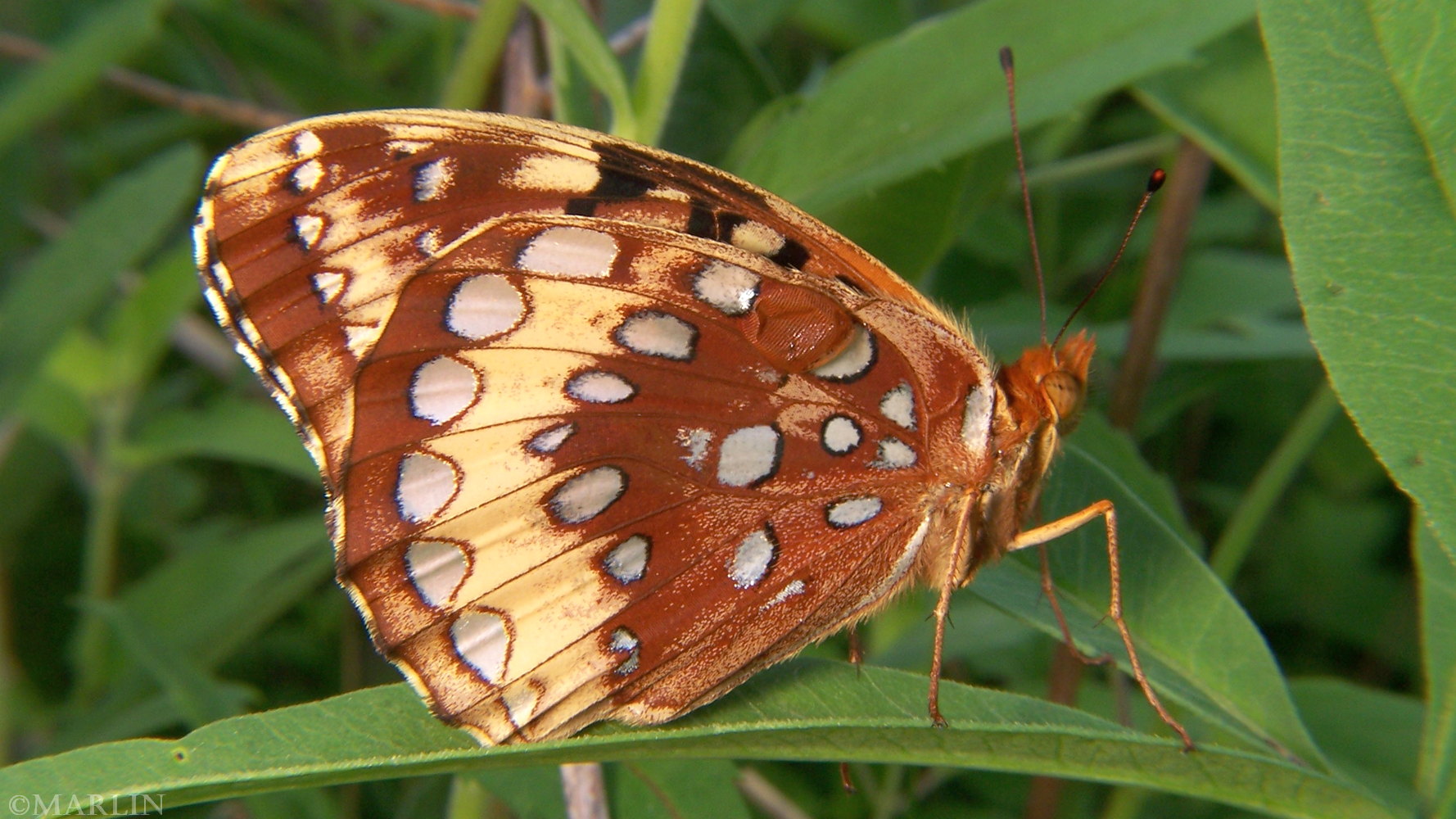
The great spangled fritillary covers a wide range of North America stretching from southern Canada to northern California on the west to North Carolina on the east. Prime habitat for this species includes moist meadows and woodland edges. – from Wikipedia
Order Lepidoptera, which contains both butterflies and moths, includes at least 125,000 known species including 12,000 in North America.
Butterfly Index | Moth Pictures | Moths Index | Skipper Butterflies