
Common Tiger Butterfly – Danaus genutia
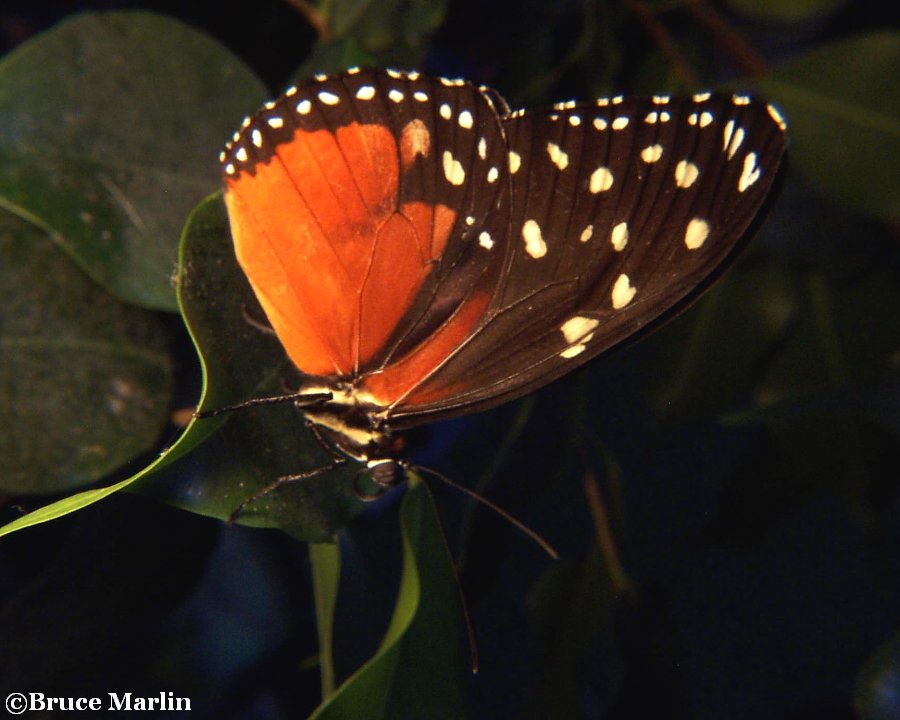
D. genutia is distributed throughout India, Sri Lanka, Myanmar and extending to South East Asia and Australia (except New Guinea). At least in the South Asian part of its range it is fairly common, locally very common. This butterfly occurs in scrub jungles, fallowland adjacent to habitation, dry and moist deciduous forests, preferring areas of moderate to heavy rainfall. It also flies in degraded hill slopes and ridges, both, bare or denuded, and, those covered with secondary growth. They are often kept as pets. Its host plants are sold in open-air markets, just like pet food is sold in this country. Good luck (karma) is said to accrue by the careful breeding and humane treatment of this precious insect.
Compare to Monarch, Danaus plexippus:
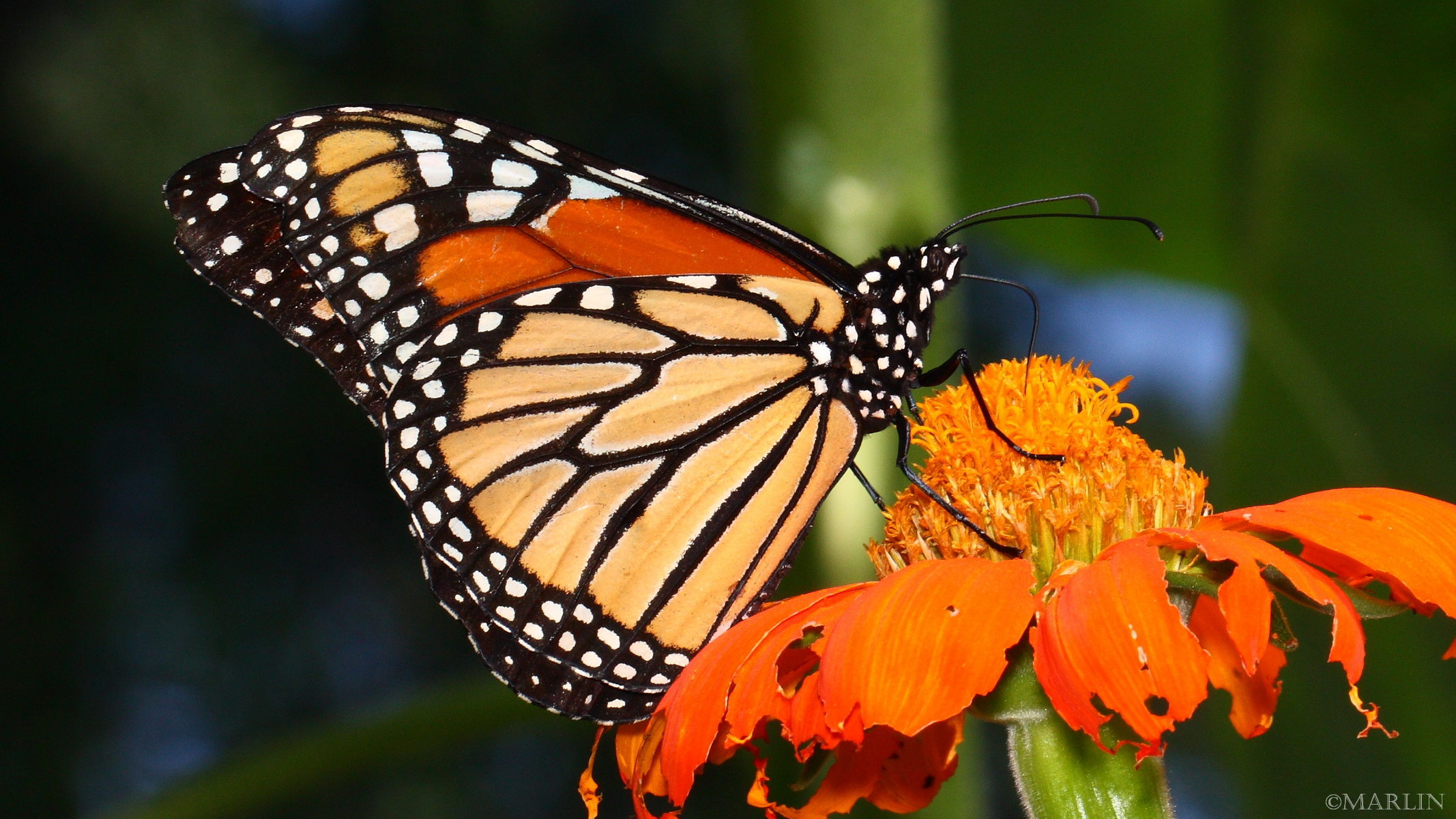
Compare to Monarch, Danaus plexippus
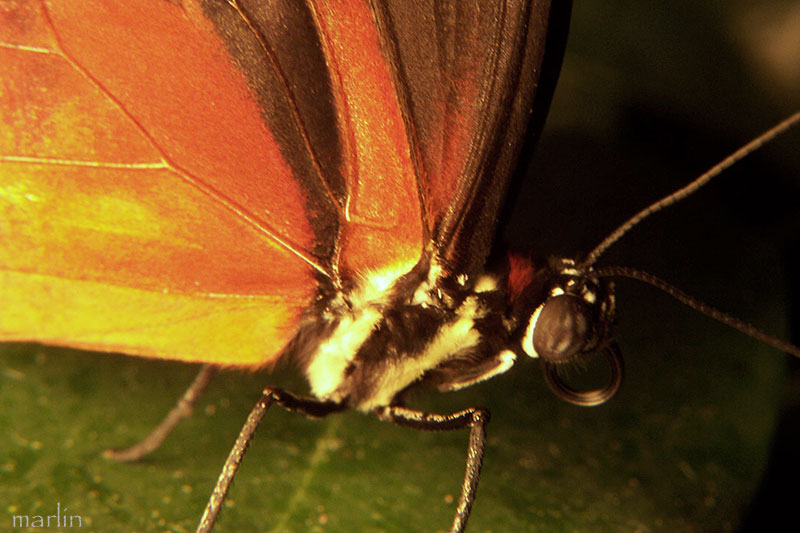
Members of this genus are leathery, tough to kill and fake death (which tends to be off-putting to predators). Since they are unpleasant to smell and taste, they are soon released by the marauders, recover and fly off soon thereafter.
The butterfly sequesters toxins from its foodplants of the family Asclepiadaceae [3]. The butterflies also congregate with other danaiines to sip from the sap of Crotolaria, Heliotropium and other plants which provide the pyrolizidine alkaloids which they sequester. A study in Northeastern India showed a preference to foraging on Crotalaria juncea compared to Bauhinia purpurea, Barleria cristata rosea and Nerium oleander. To advertise their unpalatability, the butterfly has prominent markings with a striking colour pattern.
References
- Bugguide.net, common tiger butterfly
- National Audubon Society Field Guide to Insects & Spiders Chanticleer Press 1980
- Eric Eaton & Ken Kaufman, Kaufman Field Guide to Insects of North America
Butterfly Index | Moth Pictures | Moths Index | Skipper Butterflies

