
Eleuchia Longwing Butterfly – Heliconius eleuchia
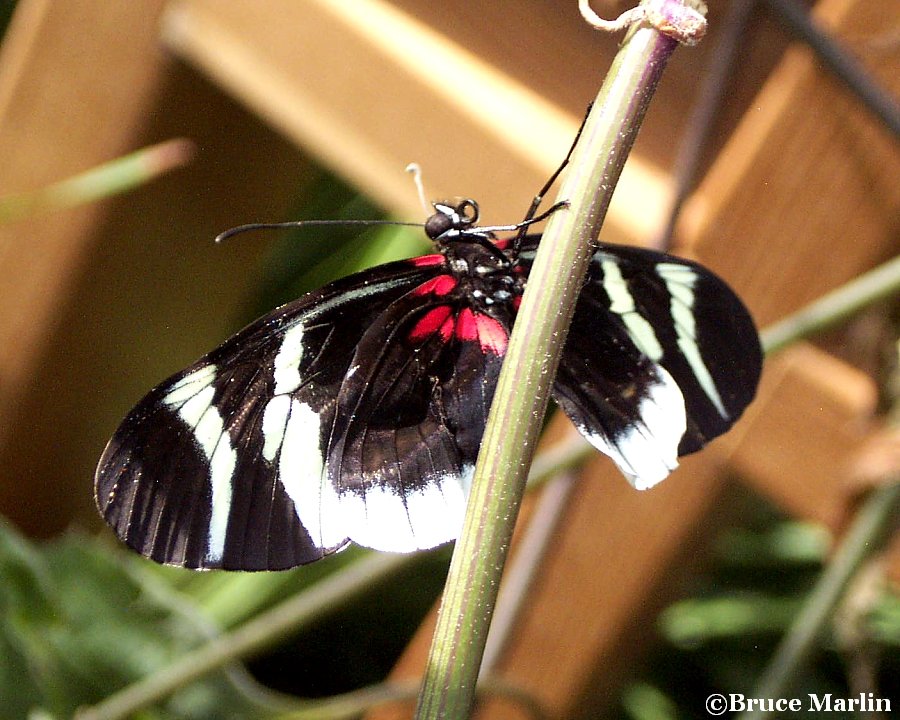
Eleuchia Longwing Butterfly
Captive longwing butterflies have unusually long lifespans and high fecundity rates, which largely result from their augmented diet. Instead of surviving on food stores from the larval stage or solely sipping flower nectar, adult longwing butterflies are avid pollen eaters. This trait makes them eminently suitable for butterfly farming and butterfly gardening.
Heliconians are butterflies with long forewings. Once placed in their own family, they are now considered closely related to the fritillaries. Larvae of most longwings feed on passion vines, and this host plant imparts noxious chemicals to the larvae which are carried over to the adult butterflies. This relationship is identical to the monarch butterflies’ reliance on its host plant, milkweed, for defense. Predators find these chemicals distasteful and avoid eating both the larvae and adult butterflies.

Within the butterfly habitat at the Notebaert Nature Museum in Chicago, these active butterflies entertain us as they fly from flower to flower, but little do guests know that each evening, the Longwings participate in another fascinating behavior known as communal roosting.
Circadian communal roosting in butterflies occurs when a number gather to rest for the night, typically on a single branch. These communal roosters can be quite numerous and can consist of single or a variety of species. Each evening, the air around the roosting site fills with butterflies as they work to find an open spot on the roost. The whole process takes about an hour to complete because the new arrivals tend to agitate the butterflies that perched earlier. Unless the roosting site is disturbed, the same butterflies will visit that spot night after night.
References
- Pictures were identified by Doug Taron, Chief Curator at the Notebaert
- National Audubon Society Field Guide to Insects & Spiders Chanticleer Press 1980
- Eric Eaton & Ken Kaufman, Kaufman Field Guide to Insects of North America
Butterfly Index | Moth Pictures | Moths Index | Skipper Butterflies