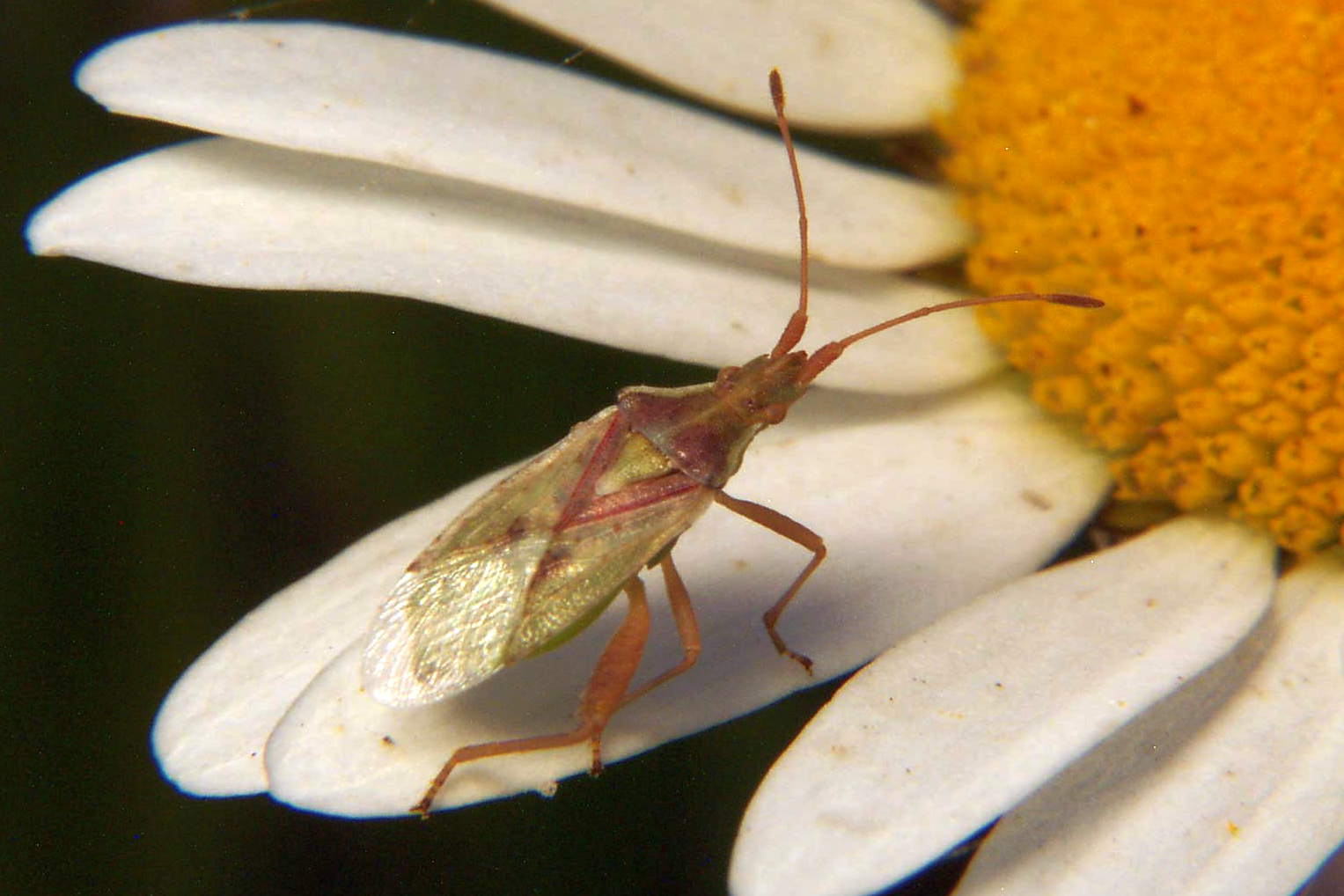
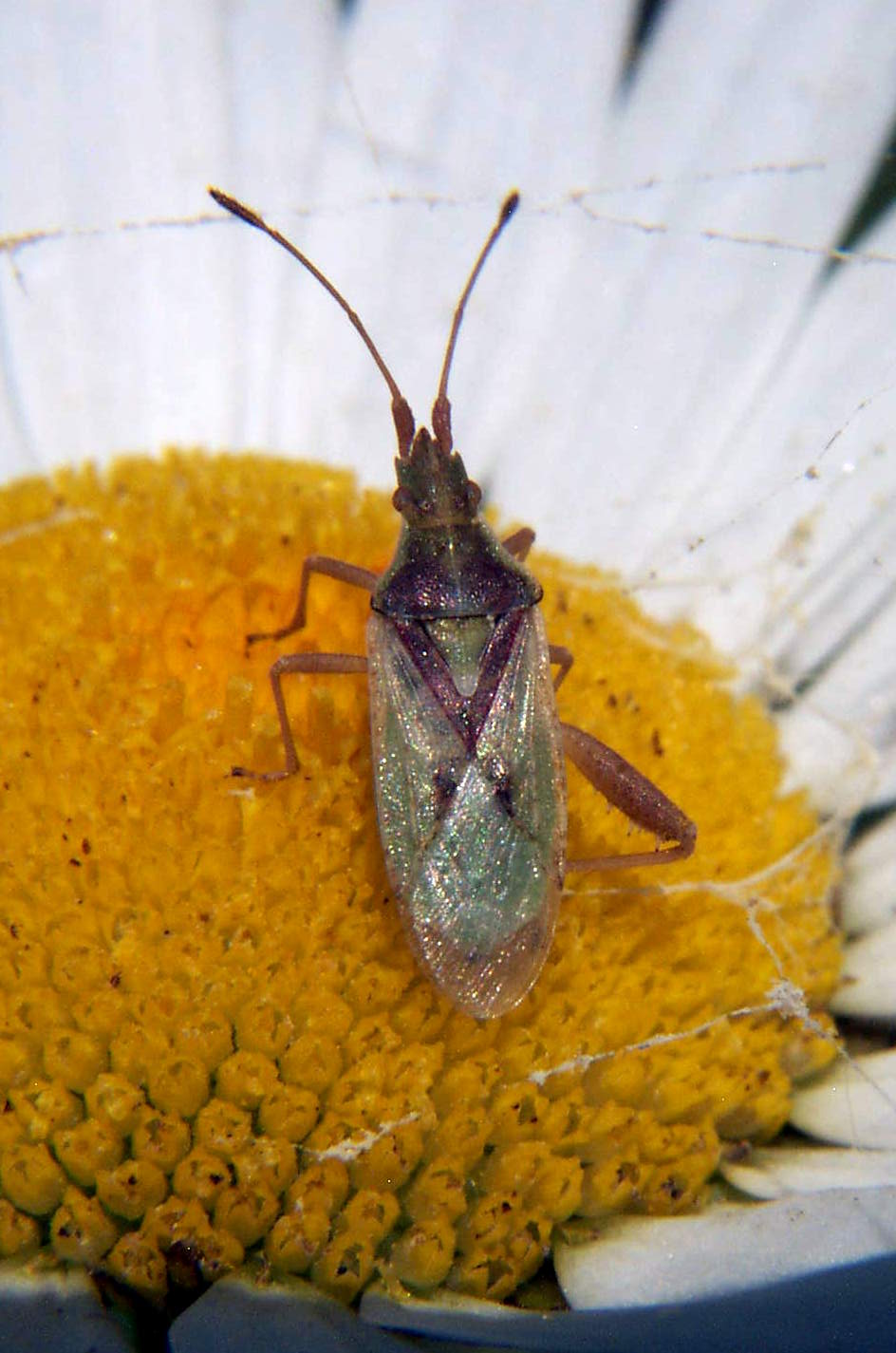
The scentless plant bugs (36 north American species) is a small family
of predominantly weedy-xeric ground dwellers. They lack a metathoracic
scent gland. The box elder bug is a member of this family.
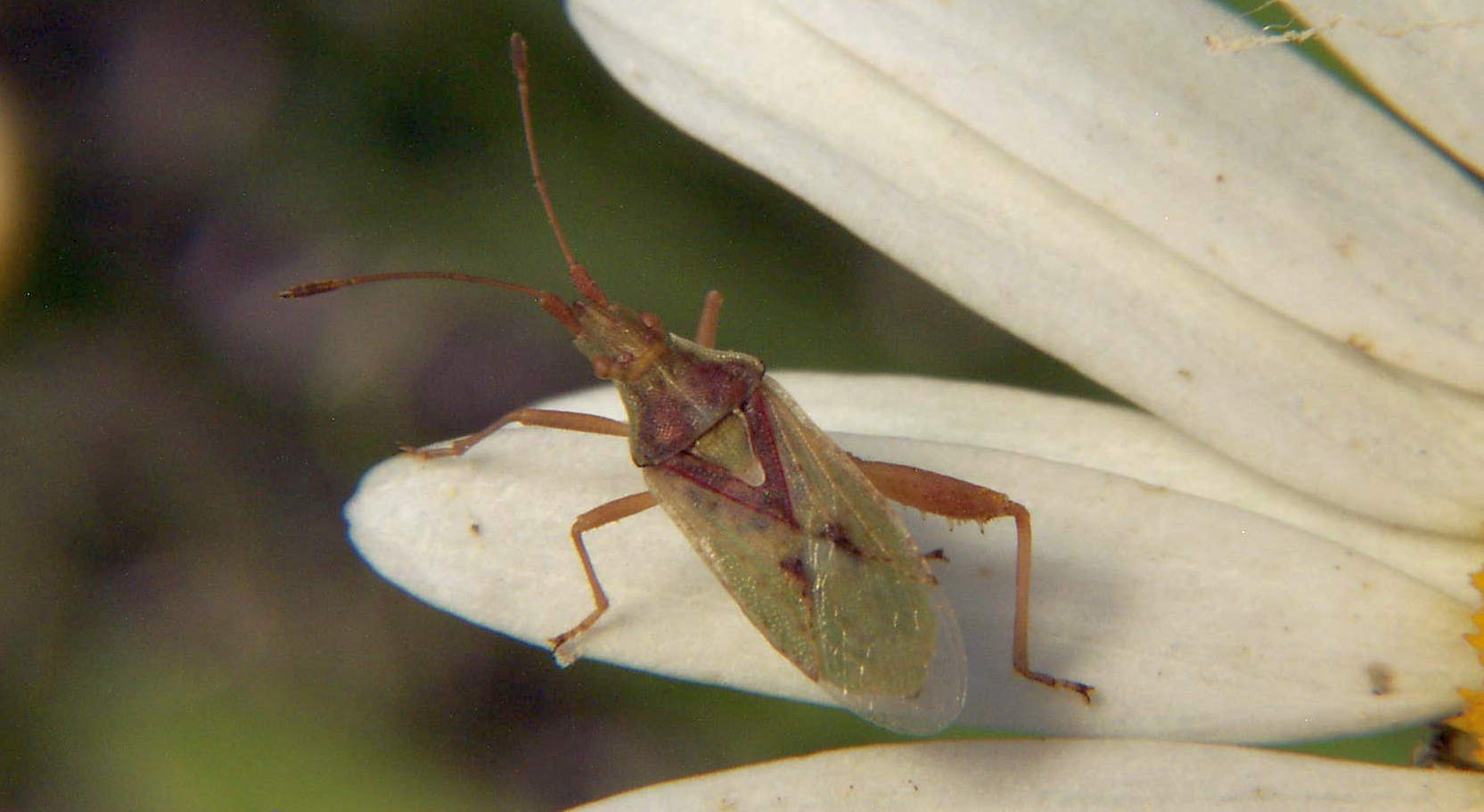
The tarnished plant bug and fourlined plant bug are
common sucking pests that attack a variety of bedding and perennial
plants. The daisy and mint families are especially susceptible to
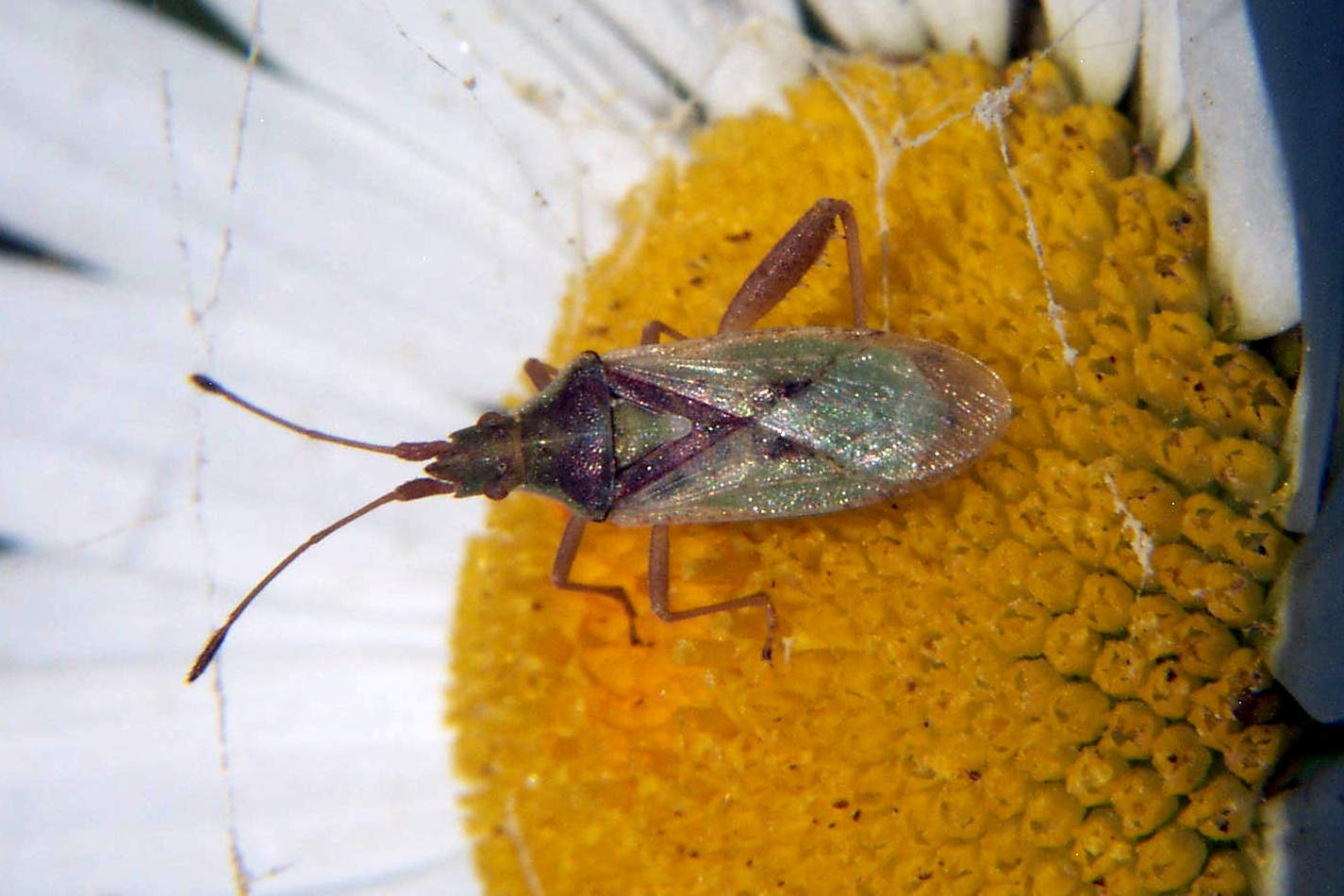
attack. Both bugs are quick to fly and the nymphs quickly run to the
under surface of leaves when approached. They damage plants by causing
small (1/16 inch), round, sunken spots on the leaves. These spots occur
when the leaf bugs kill the leaf tissues during feeding. When these
spots are numerous, the entire leaf may curl and wither. The tarnished
plant bug has a light-green nymph and the adult has mottled brown
colors. The fourlined plant bug has a bright red-orange nymph and the
adults are lime green with four black stripes.
Damage to plants
usually occurs in the late-spring and early-summer when the nymphs are
active. If this activity is several weeks before flower bud initiation,
no damage will be evident at the time of flowering. However, early
flowering plants can be severely damaged. These are the plants that need
protection. Since the plant bug nymphs cause most of the damage, control
of this stage is suggested. Inspect plants early and try to detect the
first signs of the sucking damage. Small numbers of nymphs can be
dislodged from the plants into a container of soapy water. Higher
populations are best controlled with a registered pesticide or
insecticidal soap. Check the plants again in two weeks to catch any late
emerging nymphs. The tarnished plant bug is one
of the most serious pests of small fruits and vegetables in
New England. No truly effective or reliable management options
currently exist. Growers routinely make 3-5 applications of insecticides
each year to control this insect. The cost is
$200-$500/acre.
Considering the narrow profit margin for today's farmers, these costs
are significant. The research being conducted at the Entomology Research
Laboratory represents the first step towards developing insect-killing
fungi for management of TPB. |