
 |
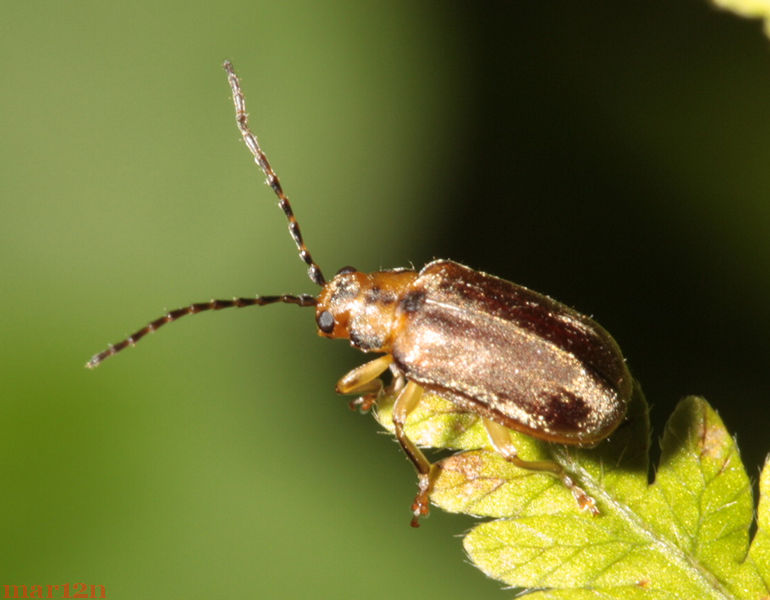
Viburnum Leaf Beetle – Pyrrhalta viburni Family: Chrysomelidae – Leaf Beetles. Beetles Main | Beetles Index | Longhorns | Soldier | Blister | Lady | Scarab Live adult leaf beetle photographed near Marienville, PA, reflecting a continuing spread westward. |
Viburnum Leaf Beetle – Pyrrhalta viburni
 |
|
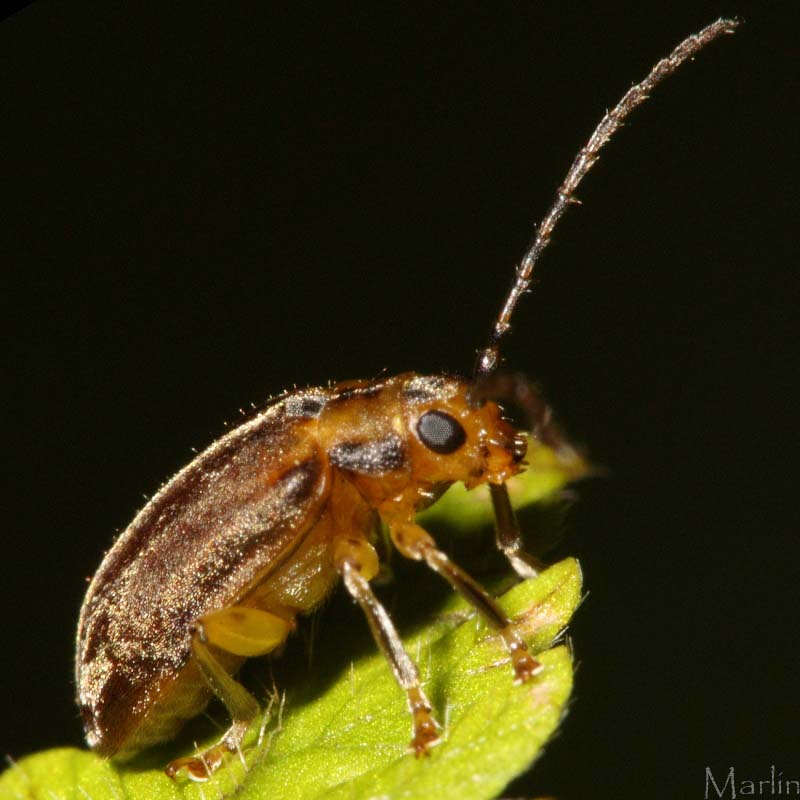
The viburnum leaf beetle, Pyrrhalta viburni, is a small brown insect native to Eurasia that was accidentally introduced into North America during the early 1900s. It was first detected in the U.S. in 1994, and has been rapidly expanding its range ever since. It is now (Sept. 2008) found throughout New England, all of New York state and into western Pennsylvania, Ohio and Michigan. A separate invasion is taking place in the Pacific Northwest. [3] June 5, 2015 Both the adult and larval stages are voracious eaters that can defoliate viburnum shrubs entirely. Plants may die after two or three years of heavy infestation. The most susceptible species of Viburnum happens to be Viburnum dentatum, commonly known as arrowwood. Viburnum leaf beetles only infest viburnums. They complete just one life cycle each year. Adult females lay up to 500 eggs on viburnum twigs in summer and early fall. The eggs overwinter and hatch in spring. Larvae feed on foliage until early summer, then crawl down the shrub and pupate in the soil. Adults emerge from the soil in midsummer, feed again on viburnum foliage, and mate. Egg hatch to adult takes just 8 to 10 weeks. [4] |
|
Beetles in the family Chrysomelidae are commonly called leaf beetles. It is the largest of beetle families among the phytophagous (plant-eating) beetles; chrysomelids are second in number of species only to the weevil, family Curculionidae. There are as many as 35,000 described species and perhaps up to 60,000 total species. Presently, the Chrysomelidae are classified in 195 genera and approximately 1,720 valid species and subspecies (plus 149 Bruchinae species) accepted as occurring in North America north of Mexico. [1]
Leaf beetles feed strictly on plant materials. The adults usually consume leaves, stems, flowers, and pollen. Most larvae are subterranean in habit, feeding on roots and rootlets, but others will consume foliage as well. Many chrysomelids are very specific to particular host plants, but most are able to live on a variety of plants; i.e. the so-called dogbane leaf beetle, Chrysochus auratus, which feeds on prairie plants such as milkweed (Asclepias sp.) and plants in dogbane genus Apocynum. [2] |
References
|
|
|
Order Coleoptera: Beetles are the dominant form of life on earth: one of every five living species is a beetle. Coleoptera is the largest order in the animal kingdom, containing a third of all insect species. There are about 400,000 known species worldwide, ~30,000 of which live in North America. Beetles live in nearly every habitat, and for every kind of food, there's probably a beetle species that eats it. Beetles Index | Longhorns | Leaf Beetles | Soldier | Blister | Lady | Scarab |
