
Himmelman’s Plume Moth – Geina tenuidactyla
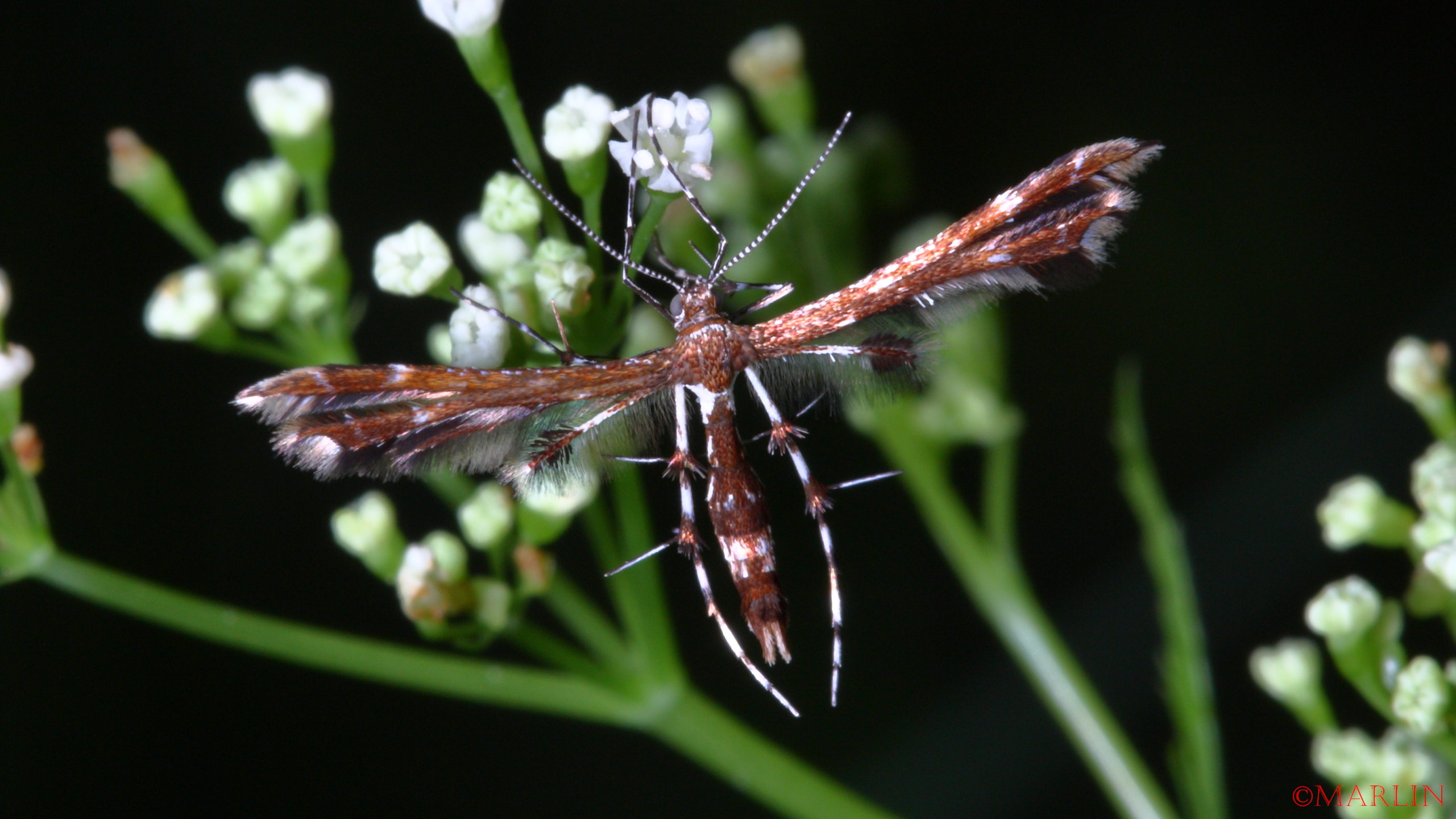
Moth Family: Pterophoridae – Plume Moths
Live adult moths photographed at Northern Illinois. Size: Body= 8mm / Wingspan= 19mm
This little moth stunned me when I got this shot home and onto the big screen. I never know what things this small really look like in the field, and I had never seen anything like this before. The thorn camouflage is amazing! Years later, I now find these moths extremely abundant in the pine forest of Ogle County in Northern Illinois, along paths and waterways. They remind me of very large mosquitoes in the way they fly.
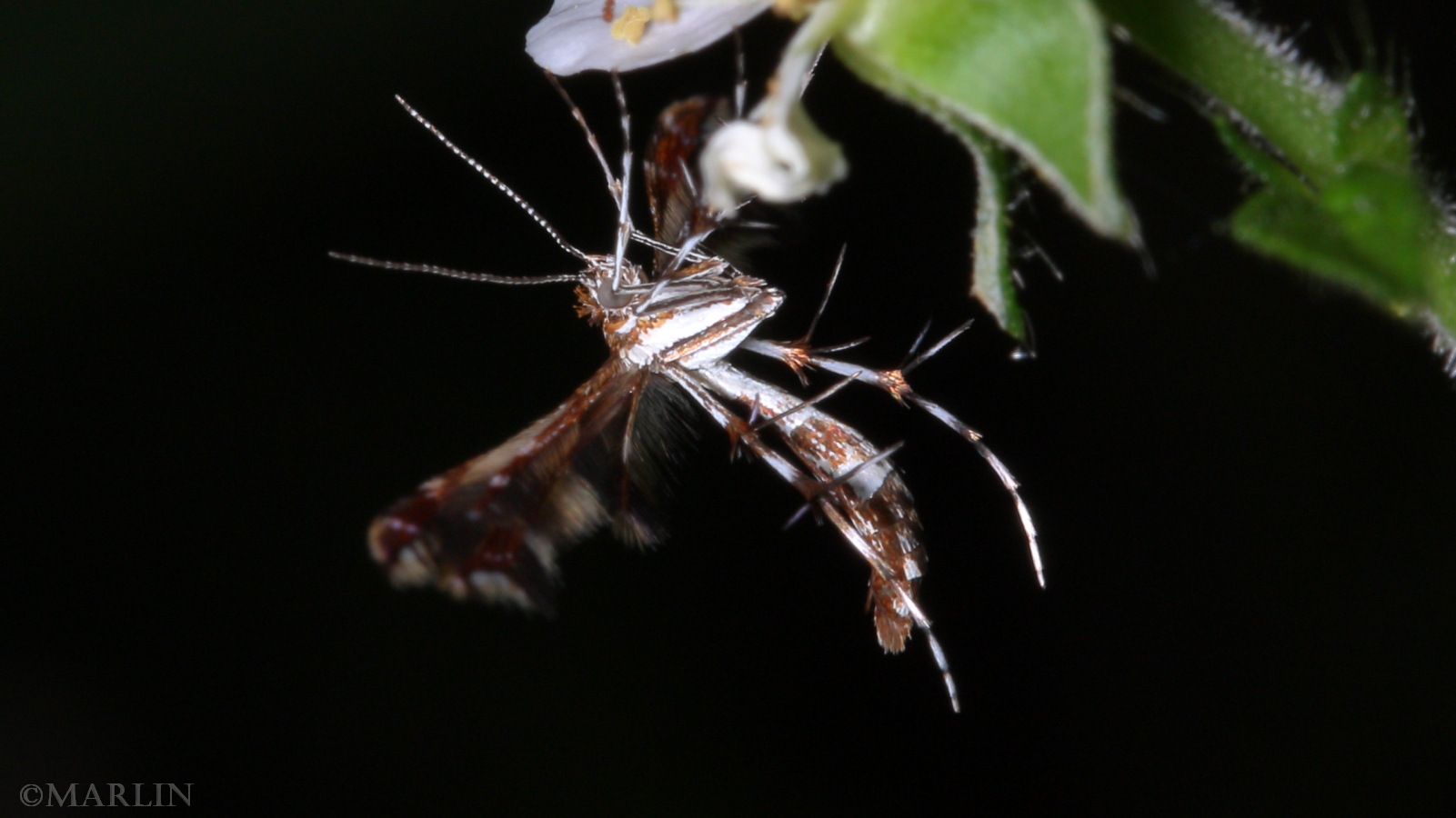
The forewings of plume moths usually consist of two curved spars with more or less bedraggled bristles trailing behind. This resembles the closely related Alucitidae at first glance, but the latter have a greater number of symmetrical plumes. The hindwings are similarly constructed, but have three spars. A few genera have normal lepidopteran wings.
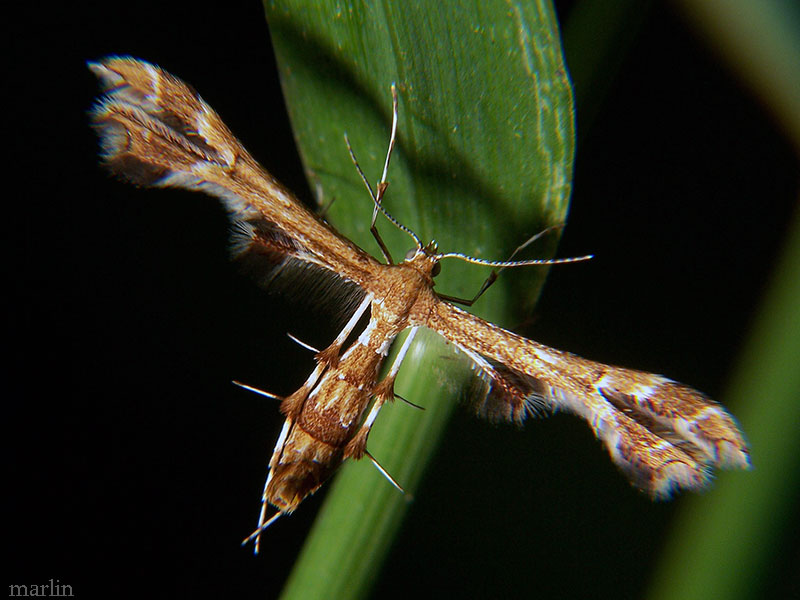
The usual resting posture is with the wings extended laterally and narrowly rolled up. Often they resemble a piece of dried grass, and may pass unnoticed by potential predators even when resting in exposed situations in daylight. Some species have larvae which are stem- or root-borers while others are leaf-browsers.
Economically important pterophorids include the Artichoke Plume Moth (Platyptilia carduidactyla), a pest in California, while the Geranium Plume Moth and the Snapdragon Plume Moth cause damage to garden flowers, including Geraniums and snapdragons.
Plume moths have been used as biological control agents against invasive plant species Lantanophaga pusillidactyla against West Indian Lantana (Lantana camara), Oidaematophorus beneficus against Mistflower (Ageratina riparia), Hellinsia balanotes against Groundsel Bush (Baccharis halimifolia), and Wheeleria spilodactylus against Horehound (Marrubium vulgare). – Wikipedia “Plume moth”
Order Lepidoptera: Moths. Unlike the butterflies, moths are usually nocturnal. Many moths and their caterpillars are major agricultural pests in large parts of the world. Moths in the family Tineidae are commonly regarded as pests because their larvae eat fabrics, clothes and blankets made from natural fibers such as wool or silk. Moths in the genus Farinalis feed on stored grain, flour, corn meal and other milled grain products.