Order Mecoptera – Scorpionflies
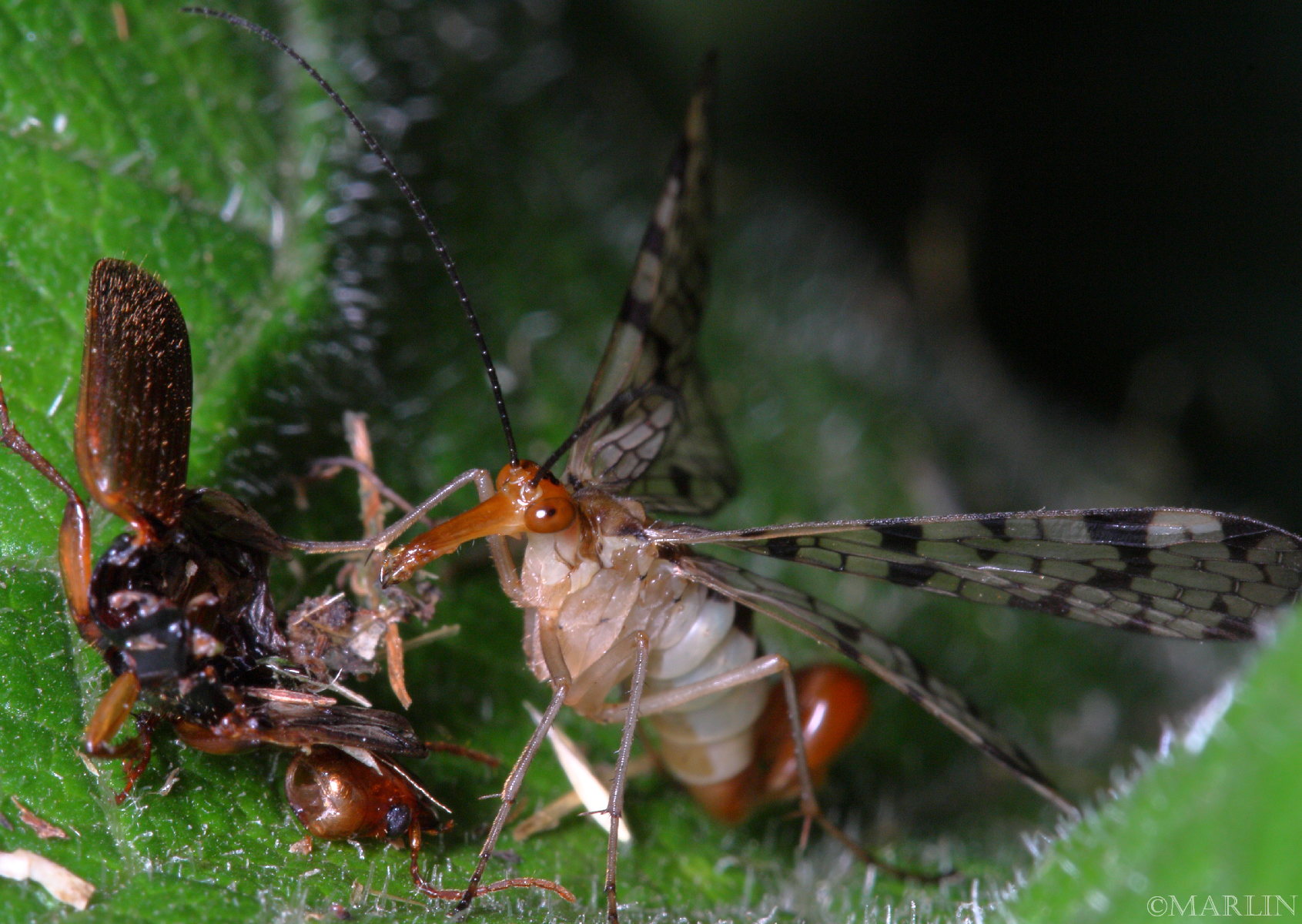
Like a proprietor in some ghastly beetle junkyard, this male scorpionfly demonstrates the valuable service these little-known insects provide to the forest understory: they help recycle dead insects. Why is that important? Well, for the same reason fly maggots or vultures or coyotes or any number of other scavengers are important; without them, our world would become even more littered with decomposing corpses.
Order Mecoptera (from the Greek: meco- = “long”, -ptera = “wings”) is an assemblage of insects with about 550 species in nine families worldwide. Mecoptera are sometimes called scorpionflies after their largest family, Panorpidae, in which the males have enlarged genitals that look similar to the stinger of a scorpion. The Bittacidae, or hangingflies, are a prominent family of elongate insects known for their elaborate mating rituals, in which females choose mates based on the quality of gift prey offered by various males.
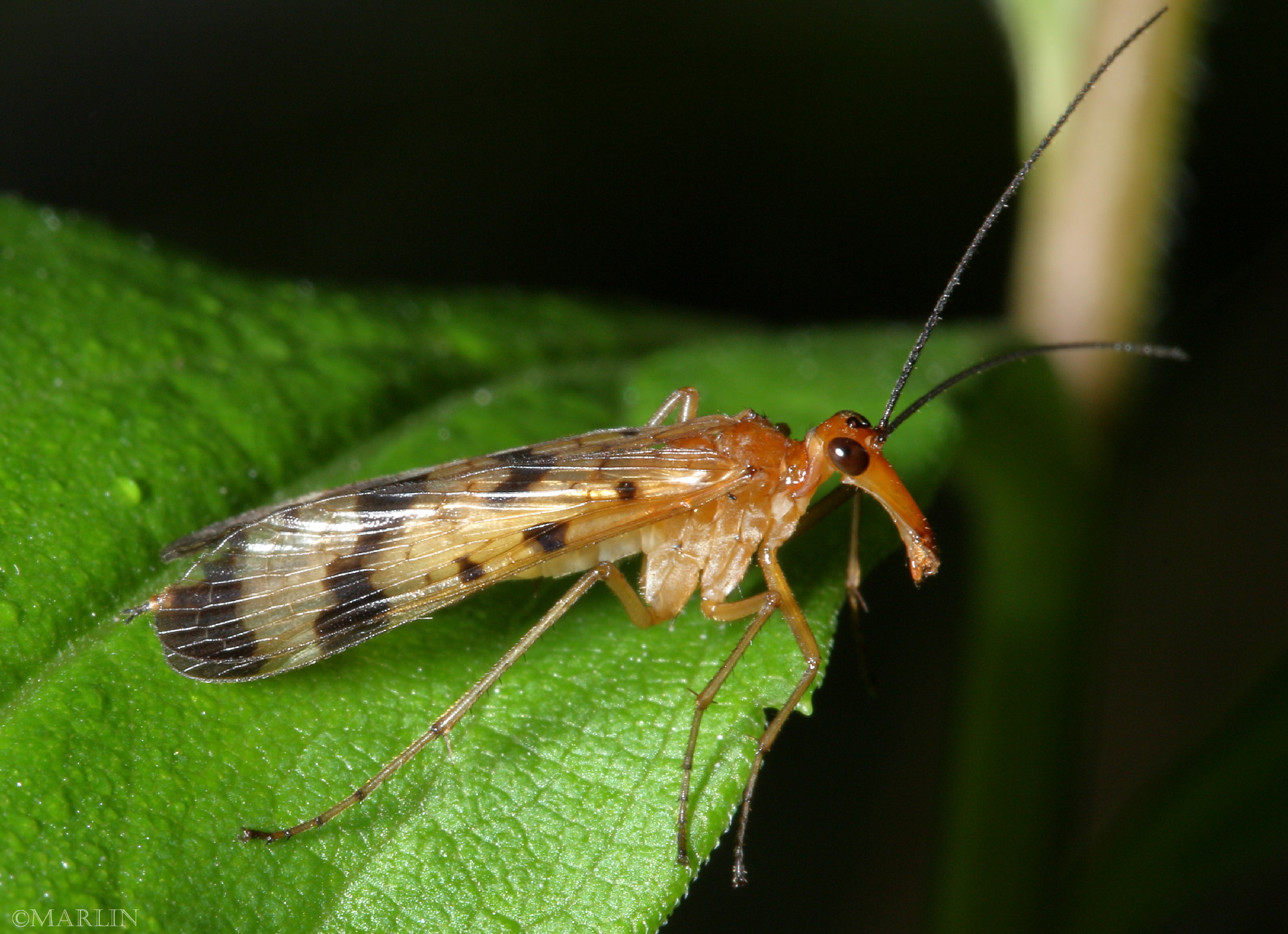
Adult scorpionflies are important scavengers and recyclers of dead insects. I have seen scorpionflies scavenging prey caught in a spider’s web; they hang onto the prey itself while they feed, thus avoid getting tangled in the web (this of course works only where a spider is not active.) Indeed, there is big business in abandoned prey in spider webs – I’ve seen much smaller flies drive away scorpionflies thus engaged.
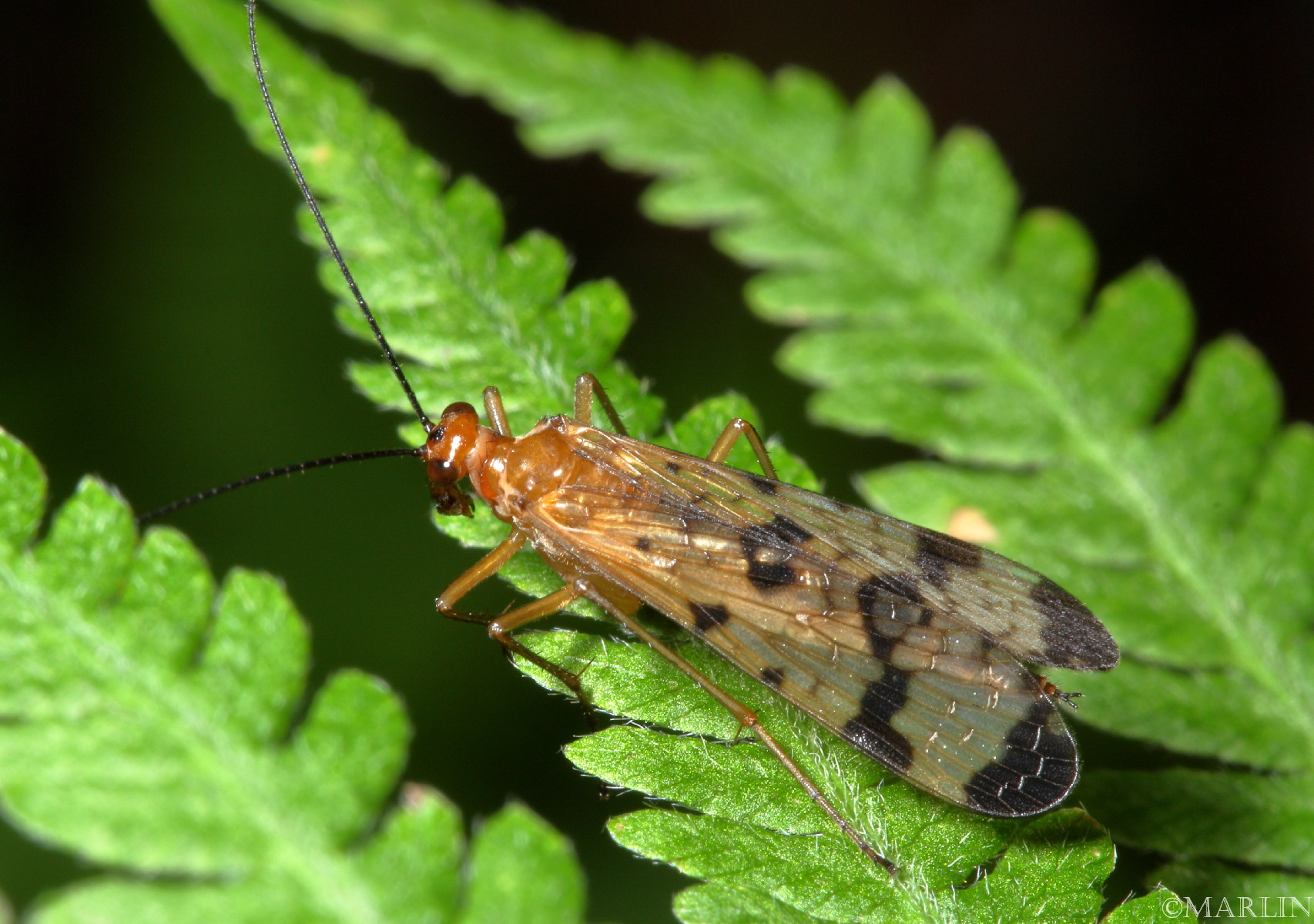
Scorpionfly is one oddball insect!
The two sets of wings wings are narrow, with numerous cross-veins, resembling those of primitive insects such as mayflies. A few genera have reduced wings or have lost them altogether. The abdomen is cylindrical, and curves upwards in the male, resembling the telson of a scorpion.
Scorpionflies, in spite of their common name, do not bite or sting. They are harmless to humans and their pets. Indeed, they are reclusive creatures of the shadowy world in decidous and conifer forest edges and glades. They can be locally abundant.
Females lay their eggs in moisture, and the eggs absorb water, increasing in size. The larvae are caterpillar-like, with short, clawed, true legs, and a number of abdominal prolegs. They have a sclerotised head with compound eyes and mandibulate mouthparts. The tenth abdominal segment bears either a suction disc or a pair of hooks. They usually eat vegetation or scavenge for dead insects, although some are predatory.
The larva pupates in the soil or decaying wood. It does not spin a cocoon. The pupae are exarate, meaning that the limbs are free of the body, and are able to move their mandibles, but are otherwise sessile.
Spider Index | Spider Main | Orb Weavers | Cobweb | Nursery Web
Tree Encyclopedia / North American Insects & Spiders is dedicated to providing family-friendly educational
resources for our friends around the world through large images and macro photographs of flora and fauna.
Online since 2002