 |
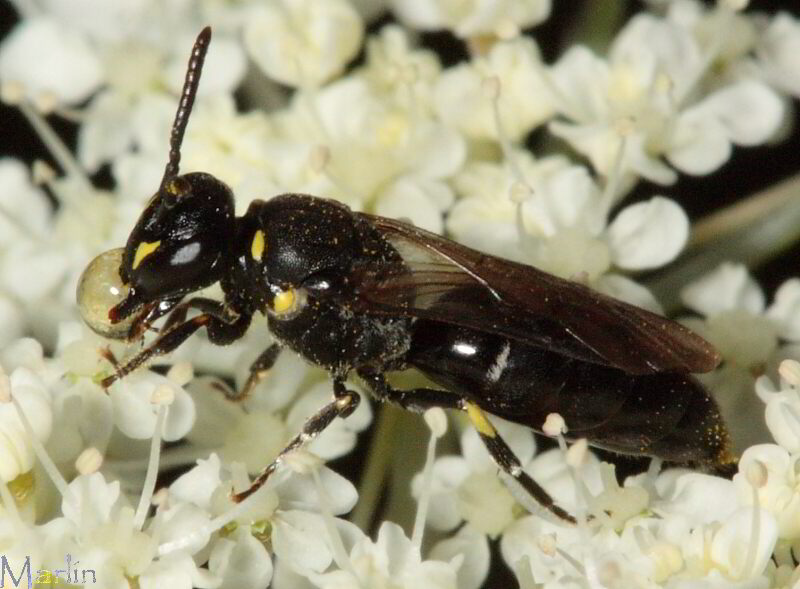
Yellow-masked Bee – Hylaeus sp. Order Hymenoptera / Family Colletidae Bees & Wasps Index | Bees & Wasps Main | Aculeata – Bees, Ants, and Stinging Wasps Live adult masked bees photographed in the wild in the Allegheny National Forest, Pennsylvania. |
 |
|
Bees in the genus Hylaeus are distributed worldwide, with approximately 50 species in North America. Commonly called "masked" or "yellow-masked" bees, they are solitary tunnel nesters that feed their larvae via nectar regurgitation. Hylaeus are short-tonged, but their small size allows them to access deep-throated flowers. They lack pollen-carrying structures (scopae). [1] Masked bees are easily mistaken for small specoid wasps, and their markings are an example of Batesian mimicry, wherein a relatively defenseless organism displays aposematic markings or behavior similar to a truly noxious or dangerous model. Lacking strong mandibles and other adaptations for digging, most species nest in "pre-owned" tunnels in plant stems and twigs. They line their burrows in a cellophane-like material which protects the larvae from dessication. Like many species of Hymenoptera in general and bees in particular, Hylaeans are increasingly imperiled by human destruction of their habitat. 18 species are listed as critically imperiled or possibly extinct. Hylaeus is the only bee native to Hawaii, where 27 species are listed as threatened, and 10 could be extinct. [1] 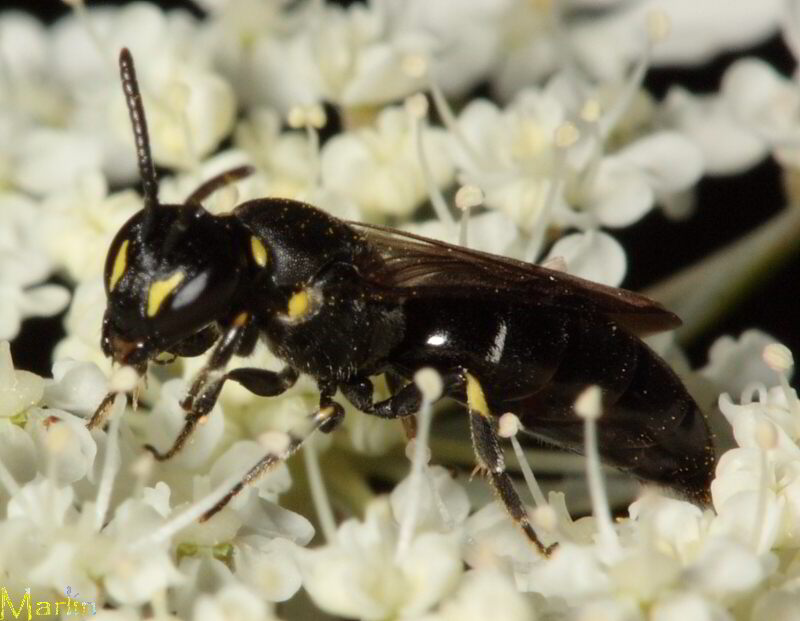 Female yellow-masked bee gathers nectar for her offspring. |
References
|
|
Order Hymenoptera: Bees, Wasps, & Ants Hymenoptera (Latin for membrane wing) is a vast assemblage of insects second only to Coleoptera (beetles) in the number of described species. Hymenoptera number some 115,000 species – of which 18,000 live in North America. Hymenopterans inhabit a wide variety of habitats, and show an incredible diversity in size, behavior, structure and color. Insects & Spiders | Bees & Wasps Index | Bees & Wasps |