Halictid Bee – Augochlora pura
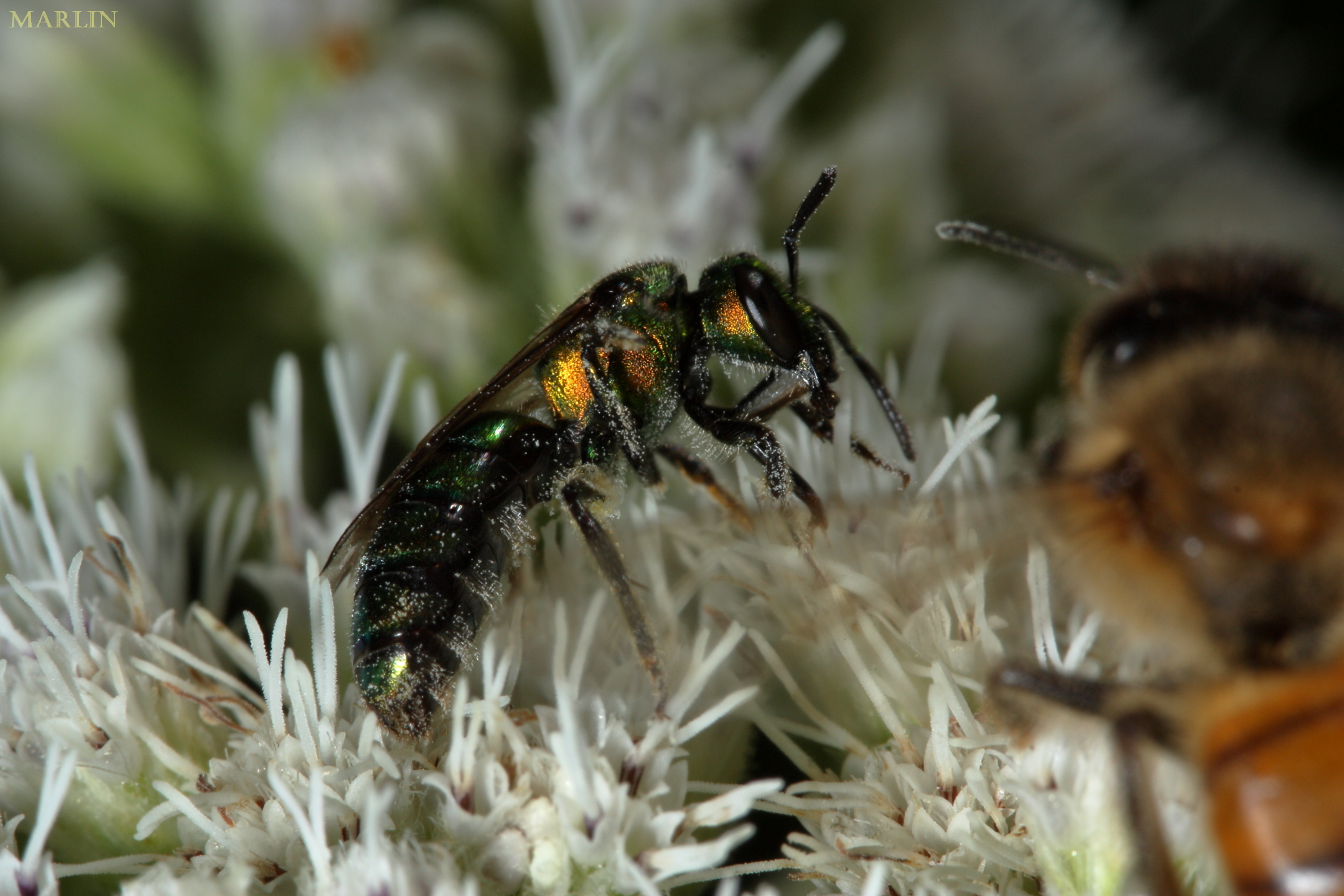 This little gal is sharing her flower with a honey bee (fast approaching from right)
Order Hymenoptera – Ants, Bees, Wasps and Sawflies / Family Halictidae
Live halictid bees photographed and filmed in the wild at North American locations.
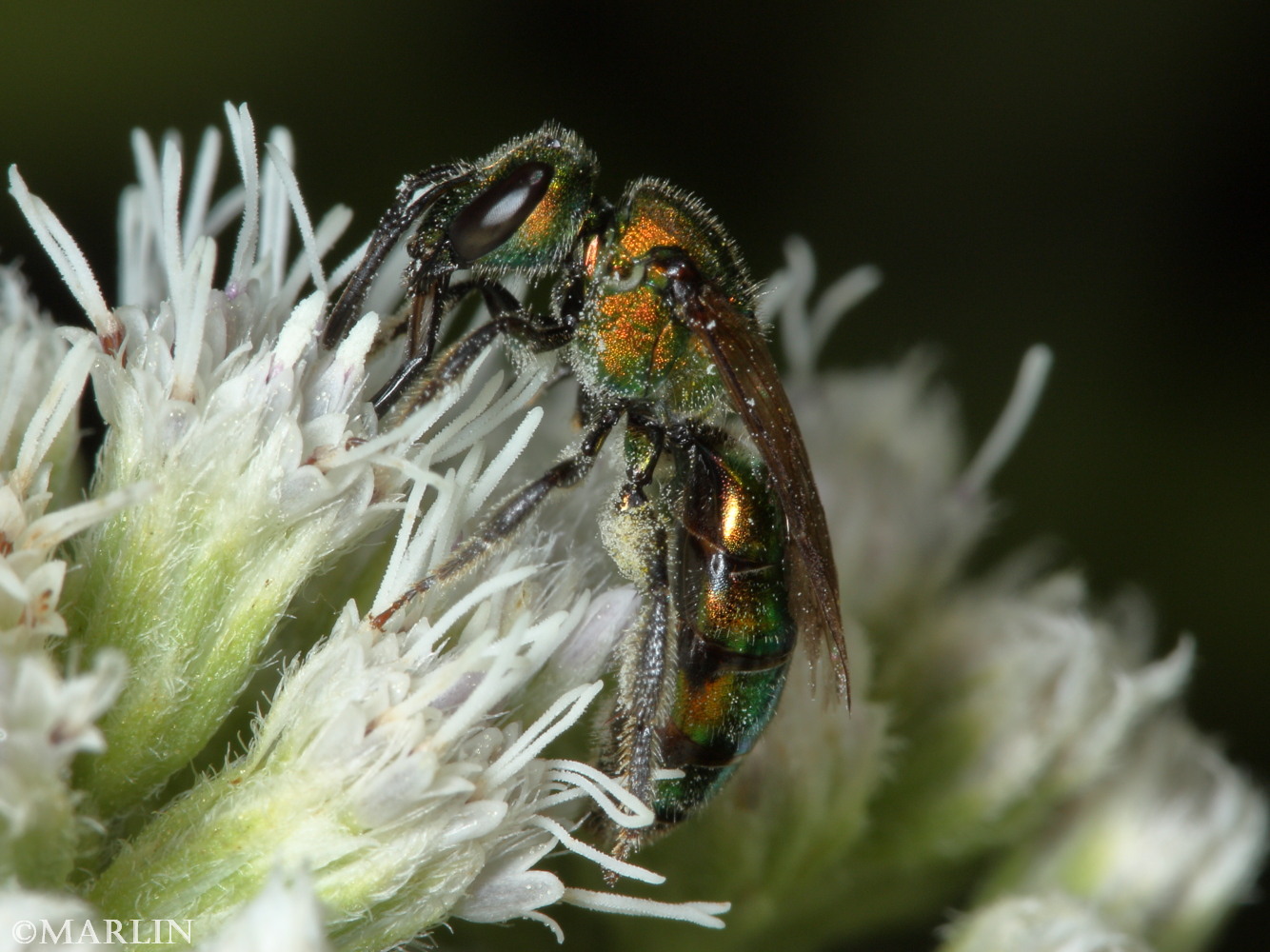 Halictid bees are important pollinators of flowering plants [2]
There are some 500 species of Halictidae in North America [1]. Many are easily recognizable due to their beautiful, iridescent green or golden colors, making them favorites of many insect photography hobbyists. Most are pollen feeders and important pollinators, especially in light of the worldwide decline of the domestic honeybee. However, continuing destruction of their habitat due to human encroachment and modern agriculture’s unfortunate love affair with vast monocultures of self-pollinating crops such as corn, soybeans, wheat, rice are exacerbating the general decline in viable populations of wild hymenoptera [2].
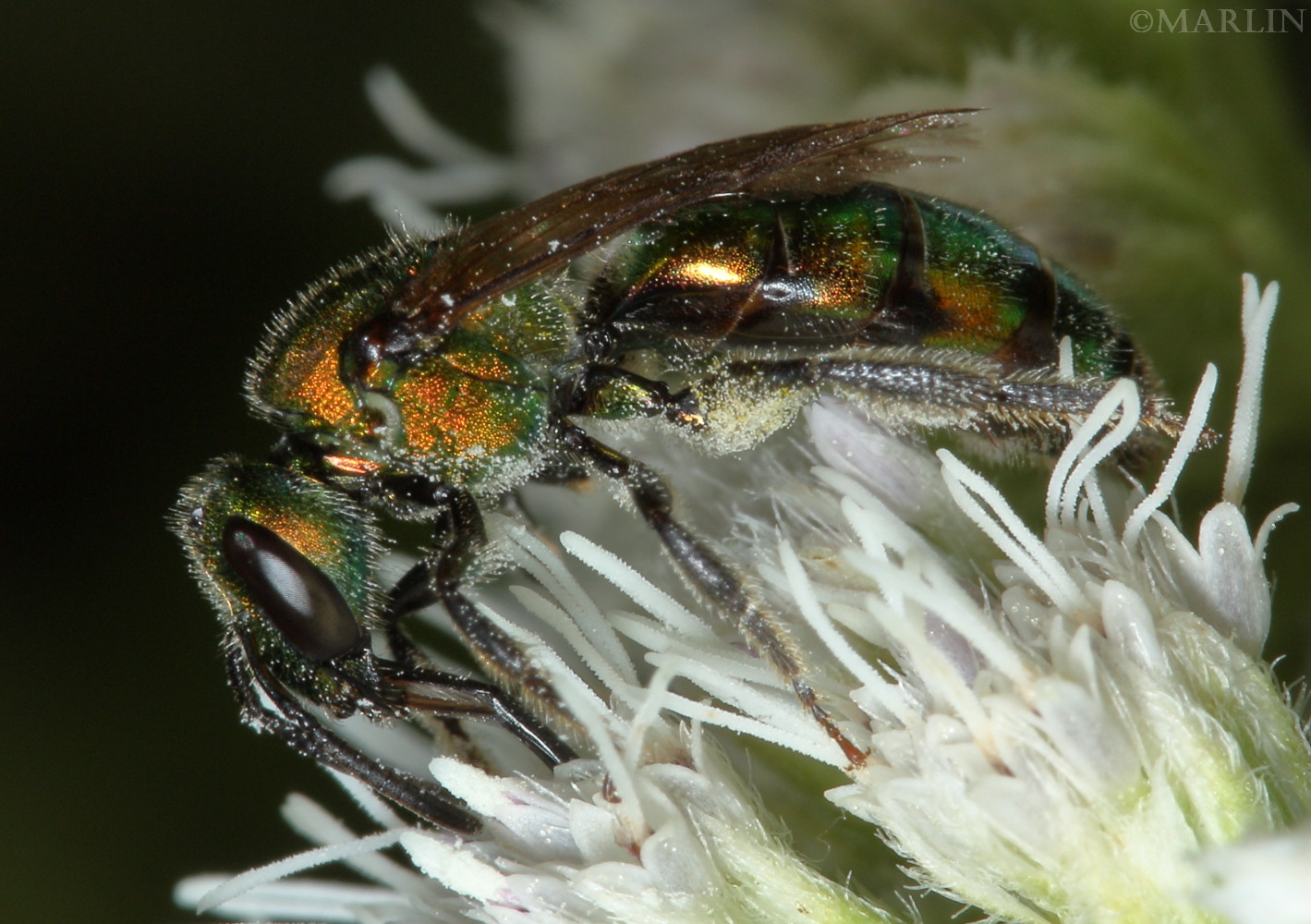 She is fairly dusted with pollen
Fruit and seed crops that depend on insect pollinators (apples, almonds, broccoli, chili peppers, cantaloupe, carrots, strawberries, grapes, among many others) produce relatively little food per acre compared to the crops that provide our staple carbohydrates. The expansion of farmland to produce these crops is a double-edged sword; it destroys wild bees’ nesting sites, and it destroys the wildflower stock the bees depend on when the fruit trees are not in flower [2].
Researchers in Britain and the Netherlands have found that the diversity of wild bee species in those countries has declined since 1980 [3].
Between 1940 and 1960, as more and more land came under cultivation in the American Midwest, several species of native bumblebees disappeared from the area. A growing shortage of both domesticated (the number of managed honeybee hives declined by 45% over the past 50 years) and wild pollinators perpetuates a vicious circle: fewer pollinators reduce crop yields, requiring cultivation of even more land to produce the same amount of food [2].
References
- John L. Foltz, University of Florida, Dept of Entomology & Nematology, ENY 3005 Hymenoptera: Halictidae.
- Marcelo Aizen and Lawrence Harder, New York Times, “Too-Busy Bees” March 24, 2010
- Science, “Parallel Declines in Pollinators and Insect-Pollinated Plants in Britain and the Netherlands“
- Wikipedia, Halictidae
Insects & Spiders | Bees & Wasps Index | Bees & Wasps Main | Beetles Index