
Common Sneezeweed – Helenium autumnale
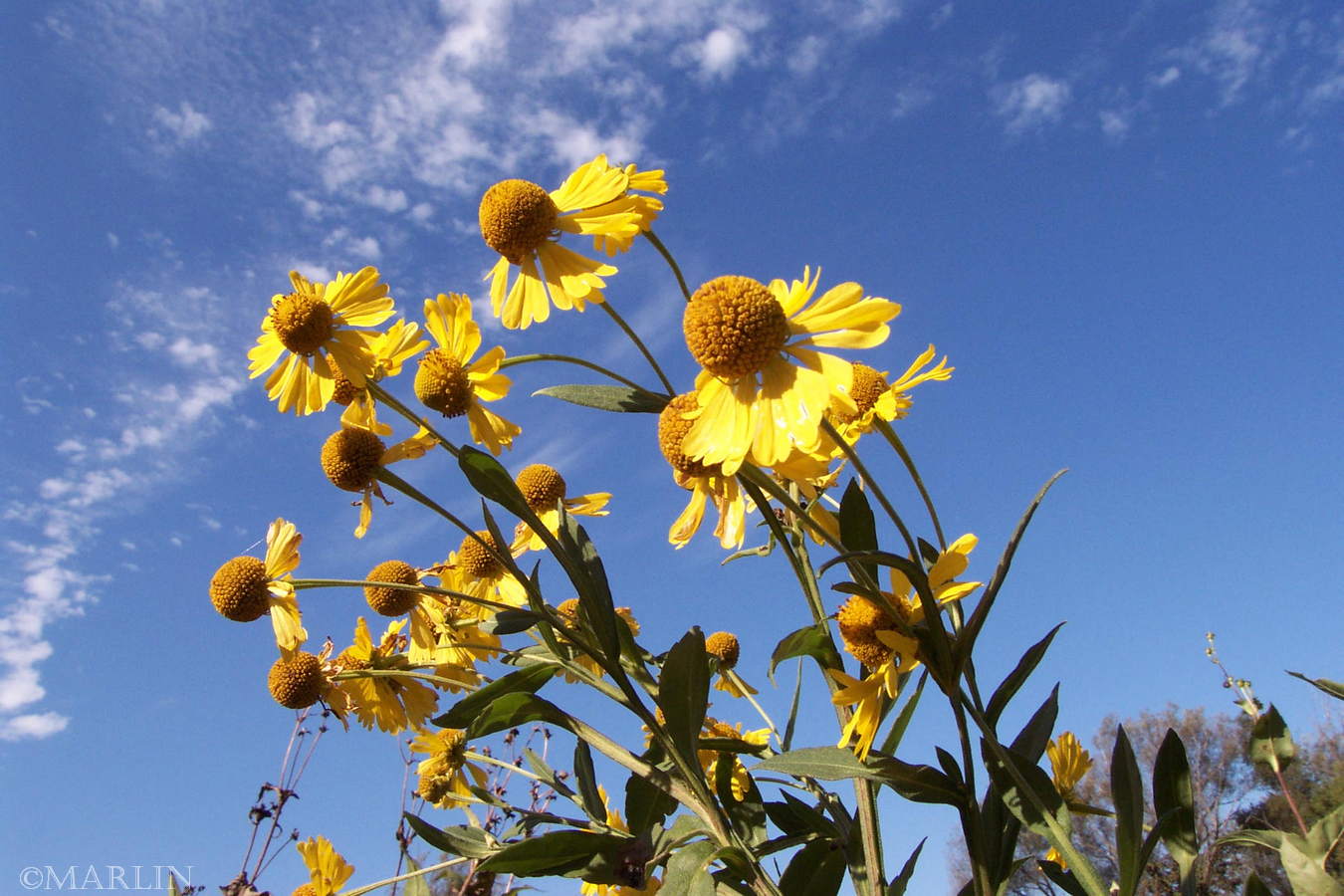
Common names: bitterweed, false sunflower, fall sneezeweed
Native Americans used sneezeweed as an infusion of roots given to prevent menstruation after childbirth, and an infusion for fever.
A winged stem bearing yellow, daisy-like flower heads with fan-shaped, drooping rays; disk flowers forming a conspicuous, greenish-yellow, ball-like structure at center of head. Flowers are 1-2″ across; rays 3-lobed. Leaves: To 6″ long, alternate, lanceolate, toothed, with bases forming winged extensions down stem. Height: 2 – 5 feet. Sneezeweed is native to, and widespread across North America. The common name comes from the former use of its dried leaves in making snuff, inhaled through the nostrils to cause sneezing.
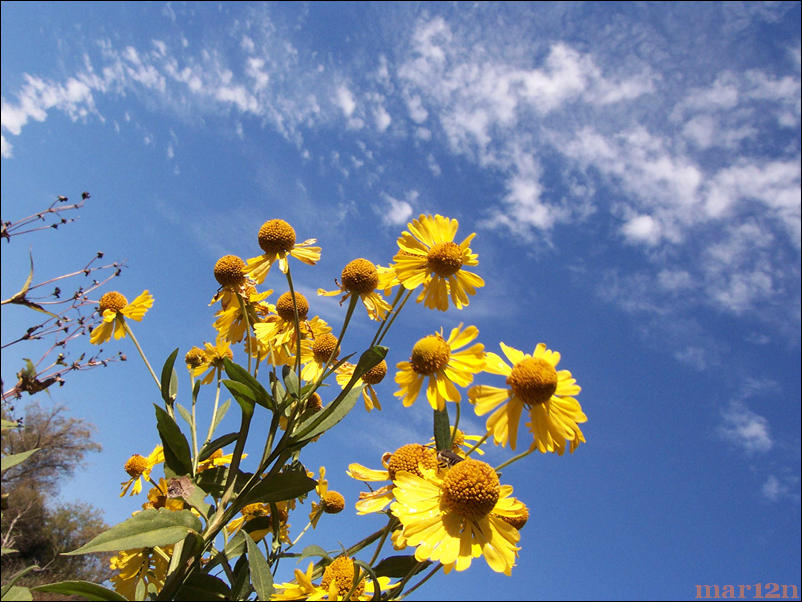
Habitat: wet meadows, thickets, swamps. Flowering time: August to November.
The most common visitors to the flowers are long-tongued bees, including honeybees, bumblebees, miner bees, and large leaf-cutting bees. Other visitors include wasps, butterflies, bee flies, and beetles. These insects seek nectar or collect pollen, although some beetles eat the pollen.
I love finding patches sneezeweed in my ramblings. It always means lots of pollinators are around. If you happen to see their happy yellow heads bobbing in the breeze on some fine summer day, take a moment to look at all the wonderful tiny creatures that benefit from these wildflowers. Take a deep breath. A universe in microcosm. Say to yourself, “If this isn’t nice, what is?”
Flowers | Index | Garden Slugs | Tree Encyclopedia | Rhododendrons | Rose Family
